How to clean soap scum from shower glass
Cloudy shower glass is usually a layered problem. Soap can react with hard-water minerals to form a film, while droplets leave mineral spots as they dry. A cleaner explicitly labeled for shower glass can help lift ordinary film, but coated glass, metal trim, stone, and years of etching all have different limits. Start by checking the enclosure maker’s care instructions and identifying what is actually on the surface.
Film, spots, or permanent etching?
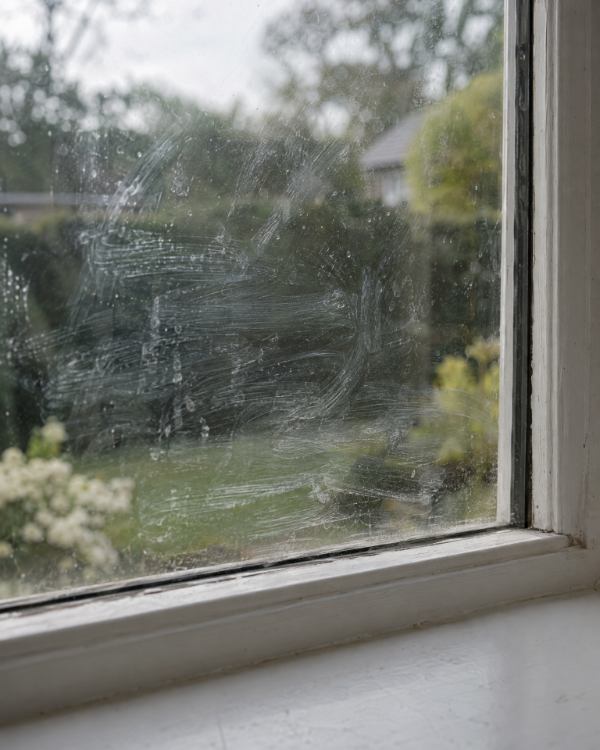
Soap scum often looks cloudy and feels slightly draggy or waxy. Mineral spots can form a dotted or scaled pattern where droplets repeatedly dry. If a cleaned and fully dry test patch stays cloudy, the glass may be etched or the factory coating may be damaged. No cleaner can put missing glass or coating back.
Pay attention to everything around the pane. A cleaner suitable for glass may be wrong for anodized aluminum, plated hardware, natural stone, or a protective glass treatment. Check the shower-door manual or manufacturer site, test a hidden corner, and keep runoff away from materials that are not listed on the cleaner label.

What you need
- The shower-door maker’s care instructions
- A cleaner whose physical label explicitly names shower glass and is compatible with any coating
- A clean, soft cloth for drying edges and hardware
- A nonabrasive squeegee for after-shower maintenance
- Gloves or ventilation if the product label directs
The routine
-
Test one dry corner
Choose a small area away from the most visible sightline. Confirm that the cleaner’s physical label names shower glass, allows the glass treatment, and will not contact an incompatible frame or stone curb. Work on cool glass. Never combine the cleaner with bleach, ammonia, vinegar, an acidic descaler, or another formula, and do not use a razor or rough pad unless the enclosure maker explicitly allows it.
-
Follow the cleaner label in small sections
Apply and remove the compatible cleaner exactly as its physical label directs, working in small sections so runoff does not reach the frame, hardware, seals, or stone curb. Use a clean section of cloth as residue transfers, and do not let product pool in the bottom rail. Stop if the test area scratches, discolors, or becomes hazier after drying.
-
Give edges and hardware separate attention
Film gathers where water lingers: around handles, hinges, seals, and the bottom edge. Clean those areas only with a method approved for their finish. A soft cloth can give you more control than a broad pass across the pane. Rinse or dry as the product and enclosure instructions require, then let the pane become fully dry before judging clarity.
Tip: Judge the result in side light after the glass dries; wet glass can hide remaining film. -
Squeegee the water, not the dry glass
After future showers, use a clean, nonabrasive squeegee on wet glass if the enclosure maker recommends it. Finish by drying the lower edge and leaving the enclosure ventilated. This removes droplets before they leave another mineral pattern and reduces the wet time that supports bathroom buildup. It does not replace periodic cleaning, but it can make each round smaller.
Common mistakes
- Using one product across glass, metal, and stone: Those finishes can have conflicting care requirements. Control runoff and clean each material by its own guide.
- Adding an abrasive when the haze remains: A stubborn mark may be etching or coating damage. More force can make the permanent problem larger.
- Cleaning but never drying: Allowing hard-water droplets to dry on the pane rebuilds the same visible pattern.
Honest expectation
QUESTIONS.
Why does shower glass look clear when wet but cloudy when dry?
Water temporarily fills the texture and changes how light moves through residue or etched areas. Dry the test patch fully before deciding whether film remains.
Can I use the same cleaner on a mirror?
Use it only if its physical package explicitly names mirrors. Keep moisture away from a mirror’s unsealed edges and backing, and follow the mirror maker’s care instructions.
Will a squeegee prevent all buildup?
No. It removes much of the water that would otherwise dry on the pane, but edges, missed droplets, and soap residue still need periodic attention.
Keep going
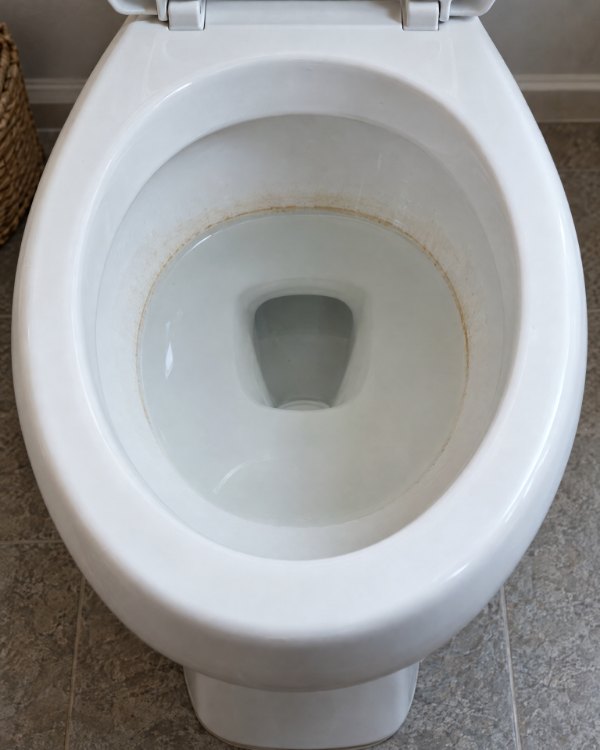
- Remove a hard-water toilet ring: use a separate fixture-specific routine for mineral buildup
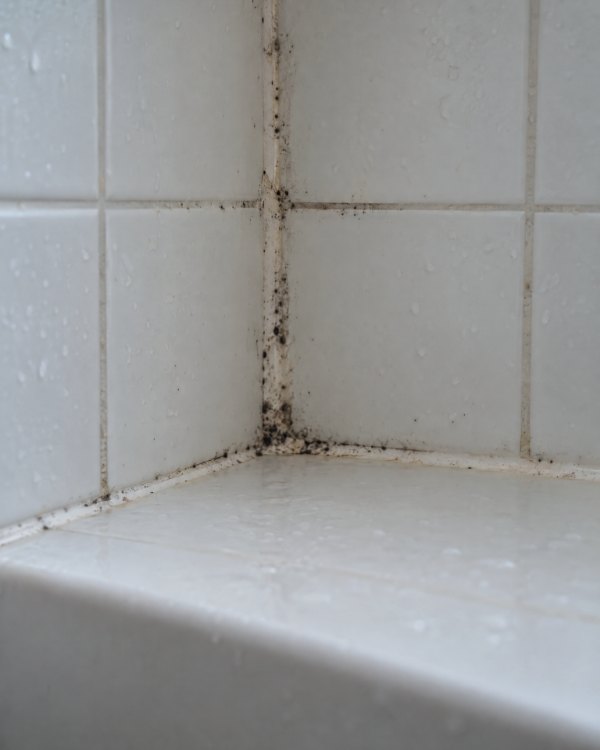
- Approach black stains on grout and caulk: recognize when moisture is the real problem
- Browse all cleaning guides: choose the routine that matches the surface and mess