How to clean a hard-water toilet ring and slow its return
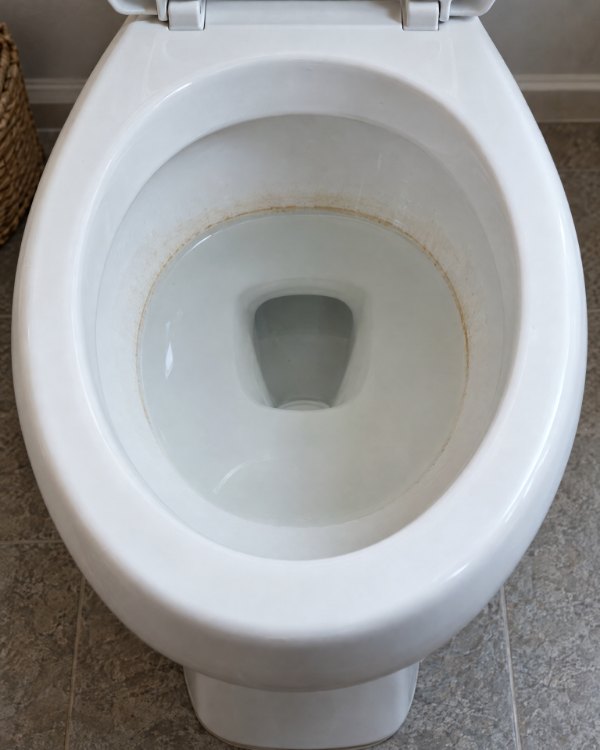
A ring at the toilet waterline is often mineral scale mixed with ordinary bowl residue. Hard water carries dissolved calcium and magnesium; as water repeatedly sits and evaporates, a visible deposit can build at the same level. The practical fix is direct contact, label-directed dwell time, light brushing, and an honest check that you are dealing with scale rather than rust or damaged porcelain.
Know which ring you have
White, gray, or tan roughness at the waterline often points to mineral buildup. Orange or reddish marks may involve iron. A dark line can be residue, staining, or growth supported by a constantly wet area. Color alone is not a laboratory test, so pay attention to texture, where the mark appears, and whether it changes after a normal bowl cleaning.
A cleaner can remove compatible buildup from intact porcelain, but it cannot repair a scratched glaze or solve the water chemistry that created the deposit. If the ring returns quickly in several fixtures, your home’s water hardness is the larger pattern. Cleaning handles the visible result; filtration or water-treatment questions belong with a qualified local professional.

What you need
- Foaming Toilet Cleaner or another bowl cleaner approved for the fixture
- A toilet brush reserved for bowl cleaning
- Gloves, ventilation, and eye protection if the product label directs
- A way to lower the bowl waterline without dismantling the fixture
- Time for the exact dwell period on the product label
The routine
-
Start with a flushed, ventilated bowl
Flush away loose residue and open a window or run the bathroom fan if the label calls for ventilation. Never add a bowl cleaner while another cleaner, bleach product, tablet treatment, or unknown chemical is present. If you recently used something else, flush thoroughly and wait until the bowl contains only fresh water before beginning.
-
Lower the water enough to expose the ring
A cleaner cannot work on a band hidden under water. Follow the fixture maker’s instructions for exposing a waterline deposit without damaging the toilet. Do not force a stuck valve or take the toilet apart for a routine clean. The goal is only to reach the deposit while staying within both the fixture and product directions.
-
Coat the line and let it dwell
Apply Foaming Toilet Cleaner according to the physical package so the product reaches the full ring and the area under the rim. Use the exact contact time on that package. Keep the bathroom unavailable to children and pets during the dwell, and do not add another product to speed it up.
Tip: A complete band of product is more useful than extra product piled in one spot. -
Brush lightly, flush, and inspect
Use the toilet brush to work around the exposed line with controlled pressure, then restore the water and flush. If the ring is visibly thinner but not gone, a second label-directed treatment is more sensible than grinding at the glaze. Stop if the surface feels chipped, catches the brush, or shows a mark that does not respond at all.

Common mistakes
- Treating every colored ring as hard-water scale: Rust, damaged glaze, and organic staining can look similar but may need a different diagnosis.
- Using a pumice stone without fixture approval: An abrasive can scratch some finishes. Check the toilet maker’s care guidance before using one.
- Mixing a bowl cleaner with tank tablets or bleach: Never mix household cleaners. Flush away one treatment completely before introducing another.
Honest expectation
QUESTIONS.
Why does the ring come back after I clean it?
Cleaning removes the visible deposit, not the dissolved minerals in incoming water. Drying splashes, keeping a regular bowl routine, and getting local advice about very hard water can slow the cycle.
Can I leave the foam on longer than the package directs?
Use the physical label, not a guess. Longer is not automatically better, and extended contact may be unsuitable for a product or fixture finish.
Should I clean the tank at the same time?
Treat the bowl and tank as separate jobs. Do not combine products, and follow the fixture maker and each product label before putting anything inside the tank.
Keep going
- Get shower glass clear again: handle the other hard-water and soap-film trouble spot
- Approach black stains on grout and caulk: know when a cosmetic stain is really a moisture warning
- Shop toilet rings and hard water: compare bowl and tank specialists without mixing their jobs