The Same Mineral That Clogged a Machine in Space Is Building Up in Your Washer
A NASA engineering report explains why "clean" towels can still smell musty, and why most fixes never reach the cause.

Key takeaways
When freshly washed laundry smells musty, the smell is usually coming from the washer, not the clothes.
Minerals from tap water dry into a chalky layer inside the machine, and the sour film that smells sticks to it.
Vinegar and scent beads were never built to dissolve the chalky buildup. That's why the smell sticks. But NASA's fix for the same mineral worked. Read on to find out more...
It's one of the most common laundry complaints there is: clothes come out of the washer clean, but they don't smell clean.
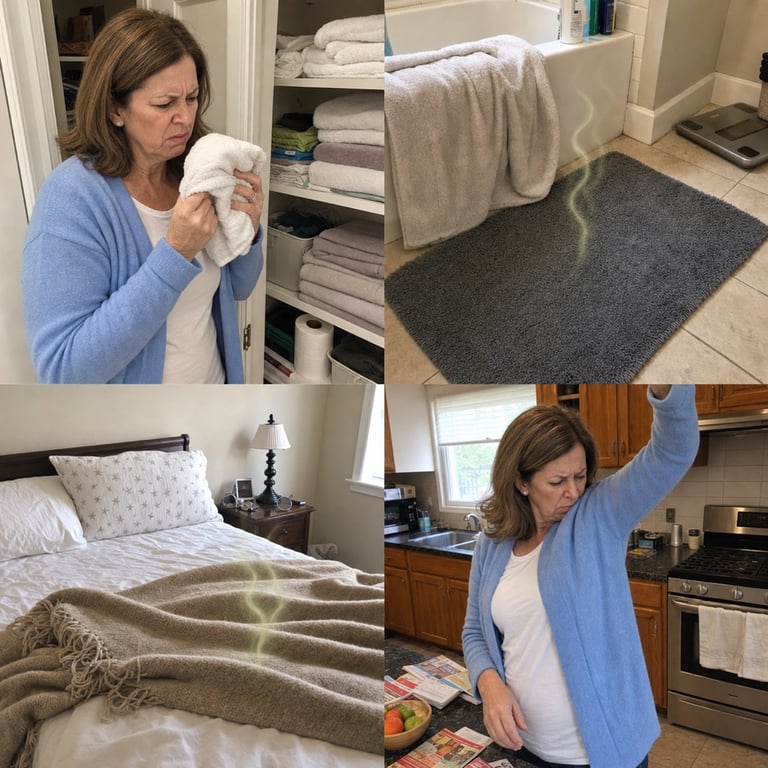
- You pull a towel off the shelf, bring it to your face, and catch that stale, damp smell.
- The bed smells fine until you've been in it a few minutes and the blankets warm up.
- You lift your arm mid-afternoon and realize the "clean" shirt is the one that smells.
Most people figure it's normal. That's just how towels smell after a while, right?
Then they start wondering if it's something they're doing:
- Using too much detergent... or not enough?
- Leaving wet loads in the machine too long?
- Or picking the wrong setting?
So they change their routine. They switch detergents. They rewash the load.
And it comes out smelling exactly the same.
But the explanation turns up somewhere few people would think to look:
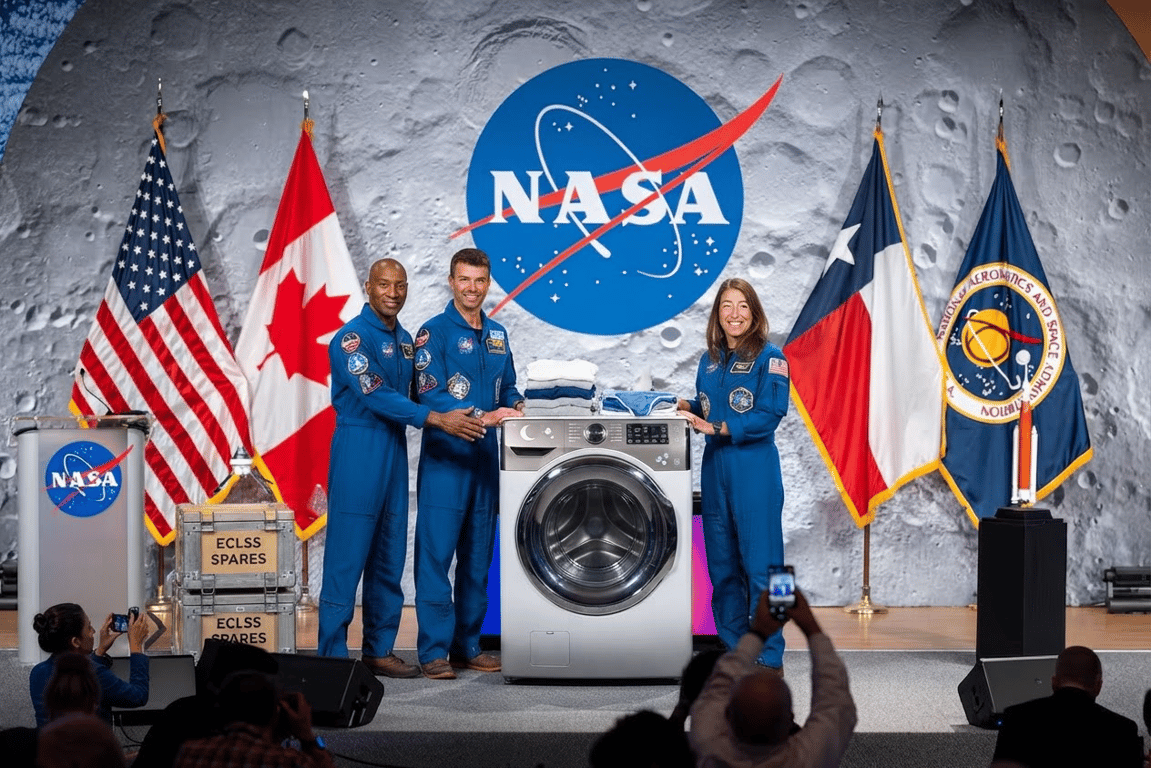
A NASA engineering report about a machine on the International Space Station.
The short answer is that the smell isn't coming from the clothes. It's coming from inside the machine.
What NASA Found Inside a Sealed Machine
This might be a bit disgusting, so brace yourself:
The space station recycles the crew's urine back into drinking water, using a machine called the Urine Processor Assembly.
Like a washer, it runs the same kind of water through the same machine, over and over.
Soon after it started running, it failed. NASA's own report describes it in one flat line:
"A failure of the UPA due to the accumulation of solids in the Distillation Assembly."


Source: ntrs.nasa.gov/citations/20170008985
In plain English: minerals built up inside the machine until it choked.
Astronauts lose calcium from their bones in low gravity, and that calcium ends up in their urine.
So every time an astronaut pees, the machine goes to work turning that urine back into clean water. And every time, the calcium leaves a thin layer of chalk behind.
Then another. Then another. Layer on layer, until the passages were packed solid.
That's how the machine broke down.
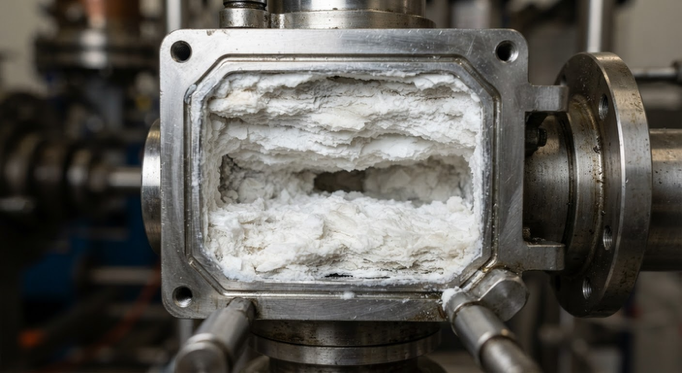
And it was buried deep inside the machine, where no hand or brush could ever reach.
Sound familiar? Your washer has spots just like that. More on those in a minute.
So NASA didn't try to scrub it out. They looked at the chemistry instead, and found something surprising.
It turned out the acid they'd been using to treat the urine contained sulfate. And calcium sticks to sulfate like glue, hardening into a chalky crust.
The treatment was feeding the buildup.

So engineers switched to a pretreatment based on "phosphoric acid," which has no sulfate in it. With nothing to lock onto, the calcium stays dissolved and drains out with the water instead of setting on the walls.

Source: ntrs.nasa.gov/citations/20170008985
And here's the clever part.
NASA doesn't wait for the machine to clog and then clean it. A small dose goes in every single time the toilet is flushed, so the mineral never gets a chance to build up.
Keep both of those facts in mind:
The problem was mineral, and the fix was an acid, used every time.
Your Washer Has the Same Problem
Your washer has more in common with that machine on the space station than you'd think. And it comes down to water.
After federal efficiency standards tightened in the 2000s, washers had to do the same job on a fraction of the water.
Manufacturers sealed the doors tighter and dropped the fill levels.

That's good for your water bill. But to get clothes clean with that little water, many high-efficiency washers reuse it during the wash. With less fresh water carrying minerals and residue away, buildup collects in the hidden parts of your machine.
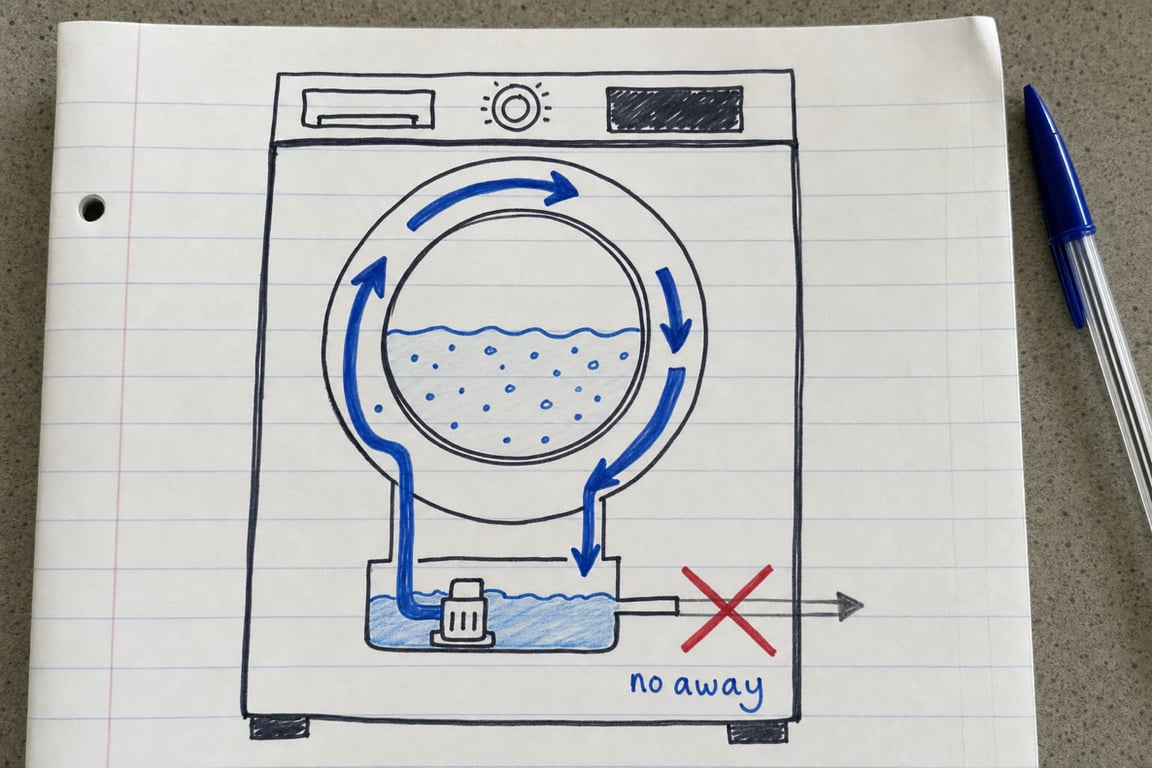
Round and round goes the same water, and the hidden parts never fully dry.
That water carries dissolved chalk from the ground, whether it comes from a city line or a well (and well water carries more).
Each time it dries inside your washer, a little chalk stays behind, like the white ring in a pot after you boil water.


The Layer That Holds the Smell
It builds the way limestone builds inside a cave
Layer on layer, in the dark, where no one looks. Except a cave gets one drip at a time, and the average household washer gets about 300 loads a year.
It survives the usual fixes
Hot water, bleach, the self-clean cycle: they aren't made to dissolve it.
It's made from your own tap water
So every load adds another layer.
It gives the smell something to grip
The sour, waxy film of old detergent and softener sticks to rough chalk in a way it can't stick to smooth metal. That film is the smell that keeps washing back into your towels.
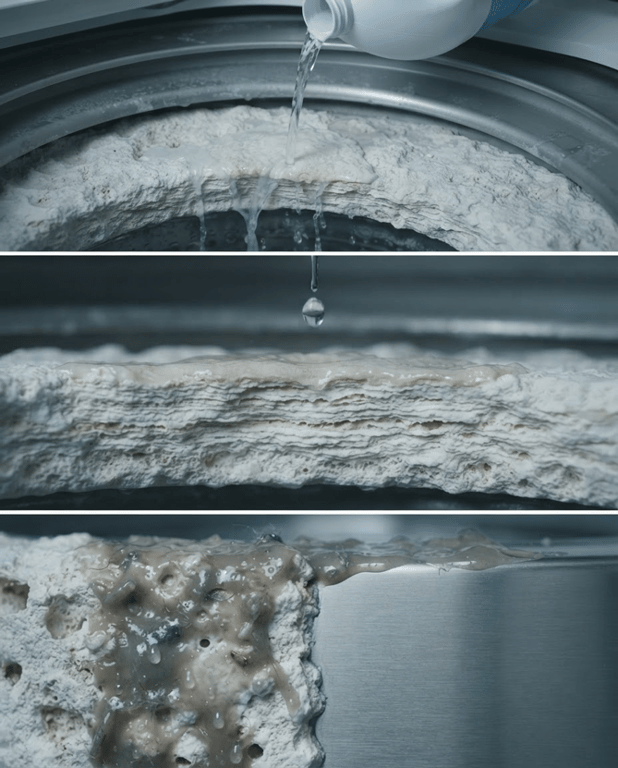
Think of It as Tartar for Your Washer
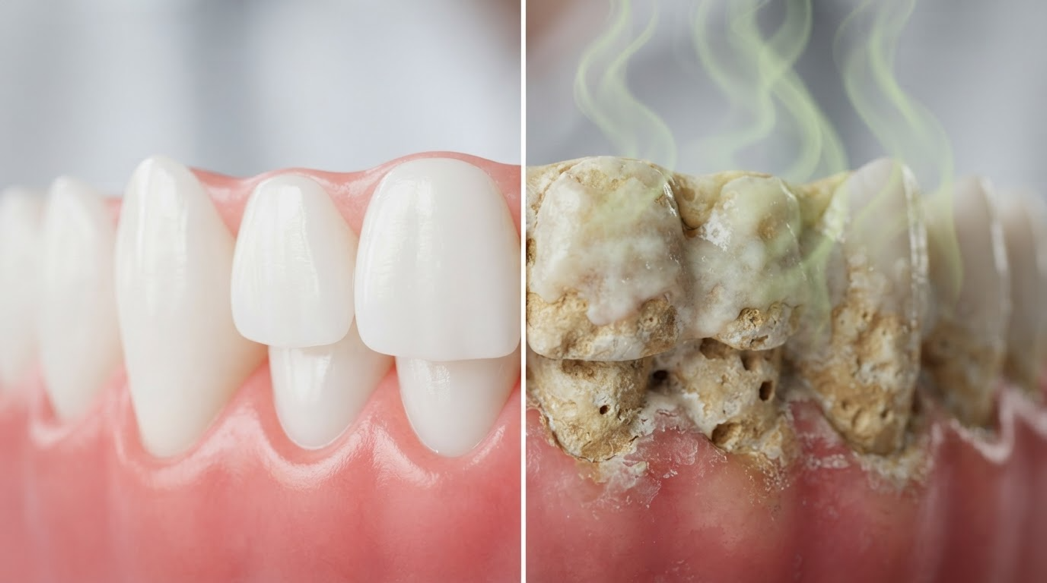
It's the same thing that happens on teeth. Smooth enamel is hard for anything to cling to. But once tartar builds up, plaque grabs onto it, and that's what causes bad breath. Mouthwash covers it for an hour. Brushing helps. But the smell keeps coming back until the tartar comes off.
Your washer works the same way. The chalk is the tartar. The film is the plaque. And the smell won't go away until the chalk does.
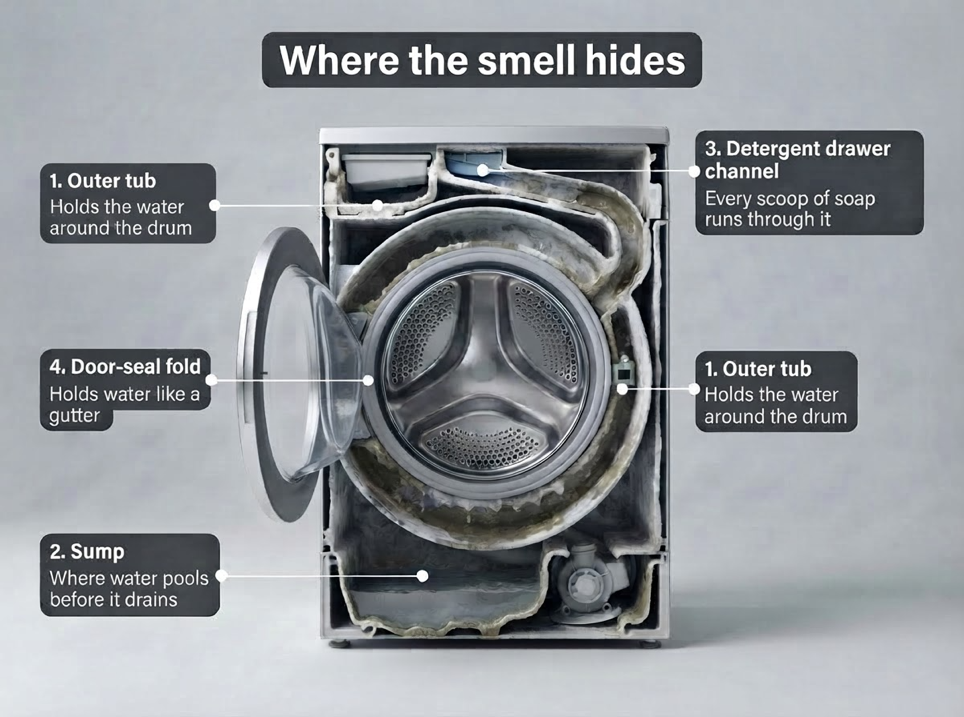
The Smell Hides in the Parts of the Machine You Can't See
The drum you load clothes into is only part of the washer.
Around it sits an outer tub that holds the water. Below it is a sump, where water pools before it pumps out. Behind the detergent drawer is a channel every scoop of soap runs through. And on a front loader, the rubber ring at the door has a fold that holds water like a gutter.
Water goes through all of it, every cycle. A hand or a cloth reaches almost none of it.
The 30-second check
Grab a flashlight and try this on your own machine:
On a front loader, pull back the bottom of the rubber door ring and shine the light into the fold.
Pull the detergent drawer all the way out and look at the back of the slot.
Touch what you find, then smell your finger.
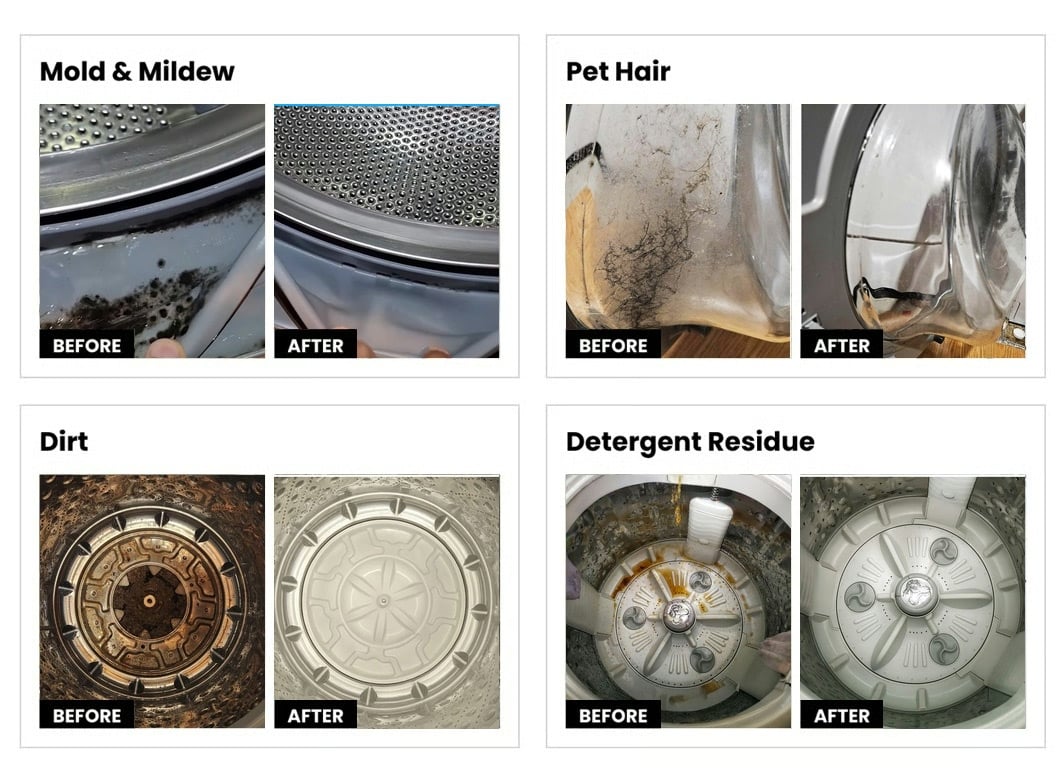
Slippery grey or black gunk is the film. A white, rough crust is the chalk it's holding onto. And those are the only two spots you can see.
Two more quick tests:
The closet test
Take a towel that's been folded in the linen closet for a few days and put it to your face. Fresh out of the dryer can fool you. A few days in the closet won't.
The hard-water check
A white ring in your kettle or a cloudy film on your shower glass means hard water, and a heavier layer of chalk with every load.
Why Cleaning the Machine Hasn't Fixed It
Washer makers have faced lawsuits over musty front loaders for years.
In one federal case, the appeals court's opinion described evidence that the manufacturer knew its new cleaning cycle "would not remove all residue deposits."


Source: U.S. Court of Appeals for the Sixth Circuit, No. 10-4188
A jury later found the manufacturer not liable, so this isn't a story about wrongdoing. It's a story about expectations: even the people who designed that cleaning cycle didn't expect it to remove everything.
The home remedies run into the same wall. Most are made to go after the film, or to cover the smell. None of them is made to dissolve the chalk underneath.
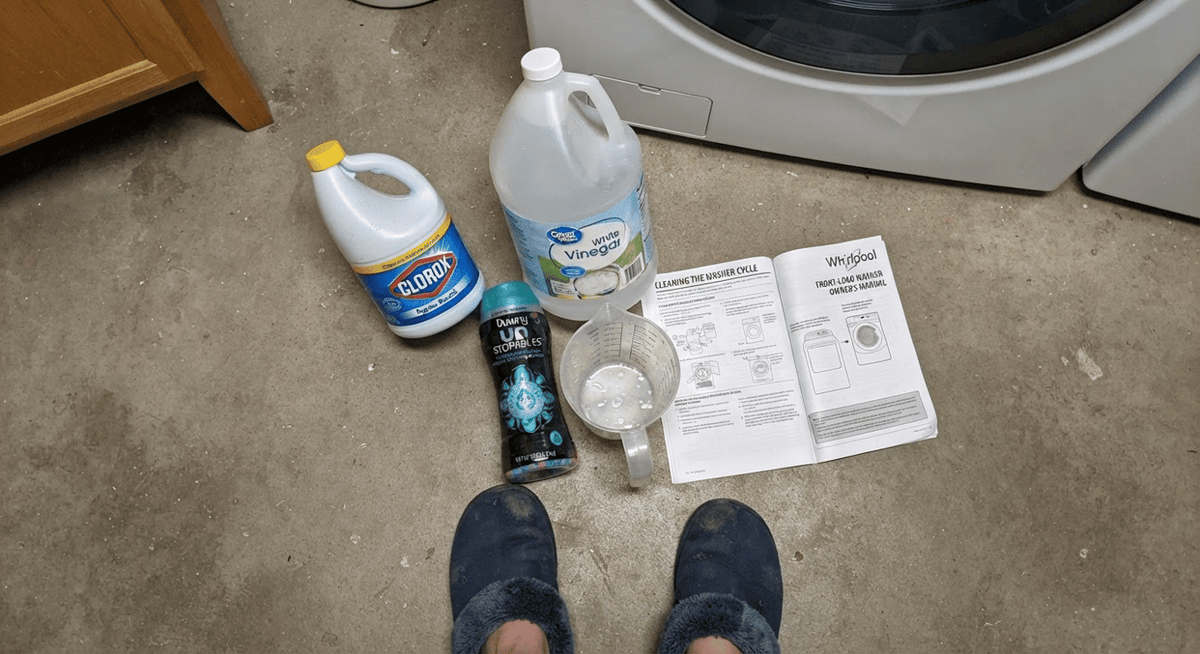
| Common fix | What it goes after | Dissolves the chalk? | Why it falls short |
|---|---|---|---|
| Vinegar | A mild acid | Not much | A cup of it is watered down in a full drum and drained away within minutes |
| Bleach | The film | No | The chalk stays, so the film grows back on it |
| Self-clean cycle | Mostly the film | Not all of it, per one maker's court record | Leaves residue behind |
| Scent beads | Covers the smell | No | The smell returns when the scent fades |
| X-All | The chalk underneath | Yes | Once the chalk goes, the film has nothing to grip |
The Household Version of NASA's Answer
When the problem is mineral, the answer is an acid. That's the principle NASA landed on.
A washer can't use what NASA used. Their pretreatment was built to stop crust forming in a machine in orbit, not to clear years of it from a laundry room.
But the principle carries over.

That's the idea behind X-All Washing Machine Cleaner, made by a small home-care brand.
It's built around citric acid, the same mild acid found in lemons.
It's pressed into a tablet with baking soda, so it fizzes and moves through the parts of the machine a hand can't reach.
How It Works
The tablet is pressed, so it dissolves across the whole cycle instead of all at once.
The acid and soda meet the water and fizz, so the formula doesn't just sit at the bottom of the drum.
The water carries it out of the drum: into the outer tub, the sump, and the channel behind the detergent drawer.
The citric acid takes hold of the calcium, so the chalk can't stay stuck to the walls. Once the chalk lets go, the film on top has nothing to grip, and it rinses out too.
And it deodorizes on the way out. So when you open the door after the cycle, there's no musty whiff. Just clean.
And hard-water homes tend to notice the biggest change, because more minerals going in means more chalk on the walls.
How to use it
One tablet in the empty drum, no clothes, no detergent.

One honest limit: no tablet reaches into the fold of the door ring. Pull it back and wipe it out once a week.
Why Once a Month Isn't Enough
Remember the space station. NASA doesn't wait for the machine to clog. It treats every flush, so the mineral never gets a head start.
Your washer gets its own drip of chalk with every load.
That's why X-All is made to be used after every load. Drop a tablet into the empty drum once the clothes come out, and the new layer clears while it's still thin, before it gives the film anything to grip.
Wait a month, and the cave has had a month of drips to harden.
What to expect
First cycle
Grey water drains out, and the smell at the door drops.
First 2–3 weeks, a tablet after every load
Older layers come off. This matters most for machines over 5 years old.
After that, a tablet after every load
The chalk never builds past a thin film, so the smell has nothing to hold onto.
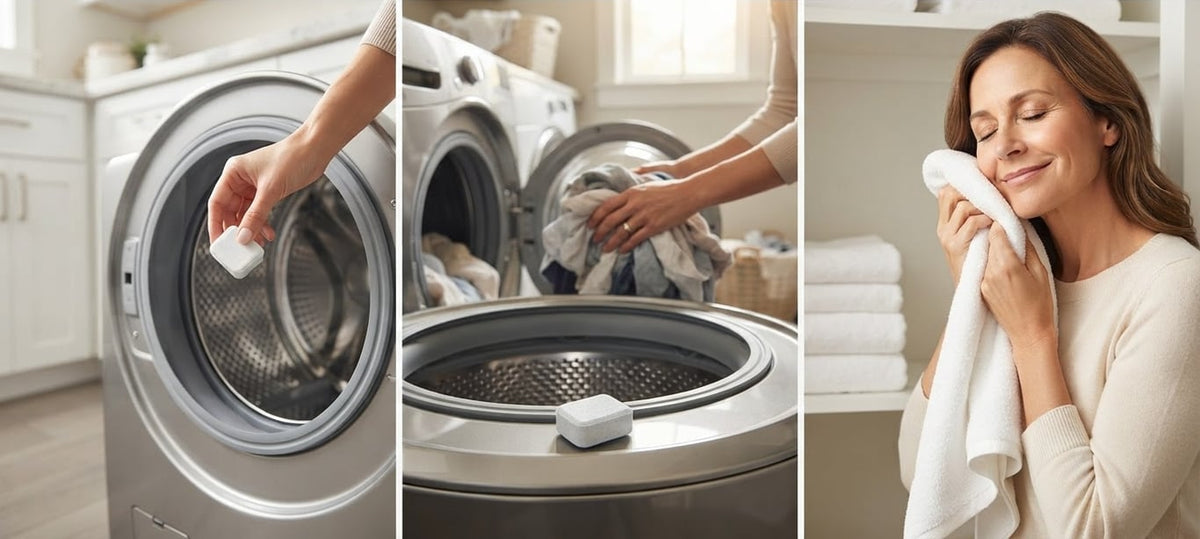
Individual results vary. Machines with years of buildup usually take several cycles.
What Customers Say
4.8
out of 5
X-All is a small brand, and its reviews say so: 4.8 out of 5 from 100k+ Happy Customers These are from its review page, word for word.
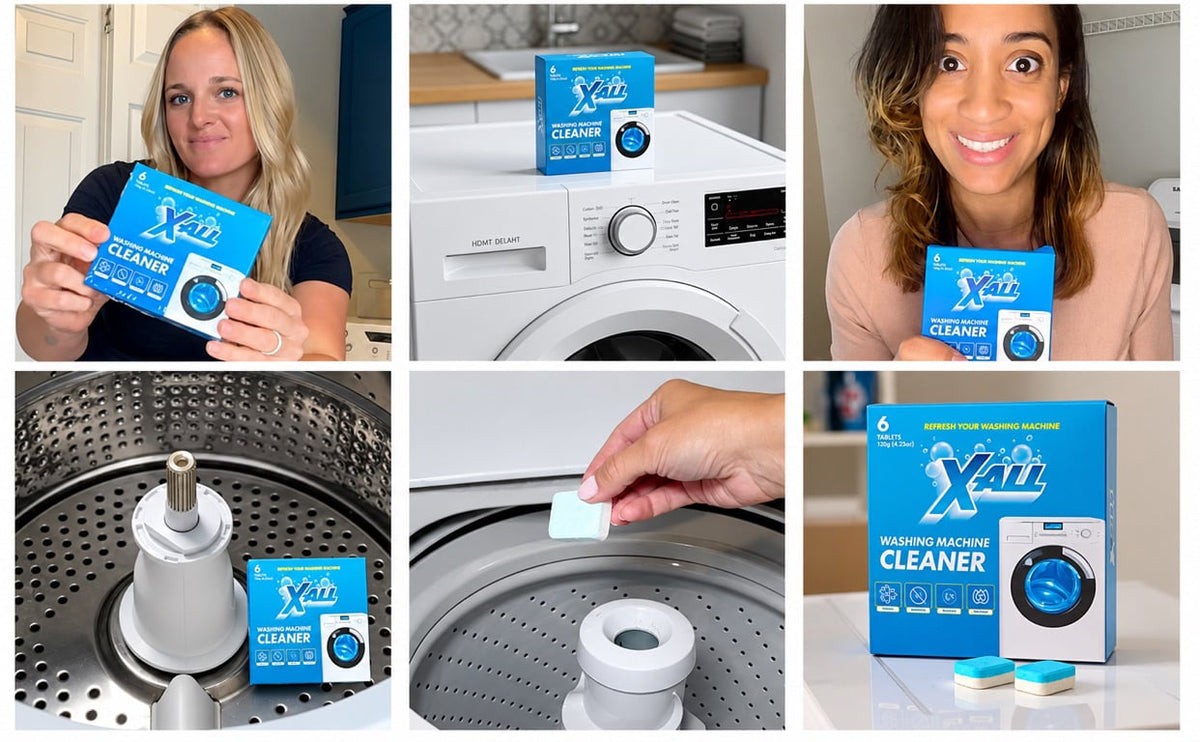
"Finally I've found a product that really works. My clothes no longer have that musty smell and my laundry room doesn't have an odor."
Verified customer
"Just happy to finally get my washer cleaned for the first time in 21 years!!"
Kris C.
"I have had my washer for five years, it never smelled so good!"
Elizabeth S.
And one that's worth reading closely:
"I wish I would've had this product when my front loader was new. Although XAll is cleaning up a lot of the gunk I don't think it will erase the 'years' of no XAll."
Sharon W.
She's right. Buildup that went on in layers over a decade comes off in layers, which is why the first few weeks matter most.
What the Smell Costs
Add up what a musty washer quietly costs a household: scent beads, extra detergent, bleach, jugs of vinegar, all bought again every few weeks.
Then there's the bigger number many people start looking at: a new washer, often $800 or more.
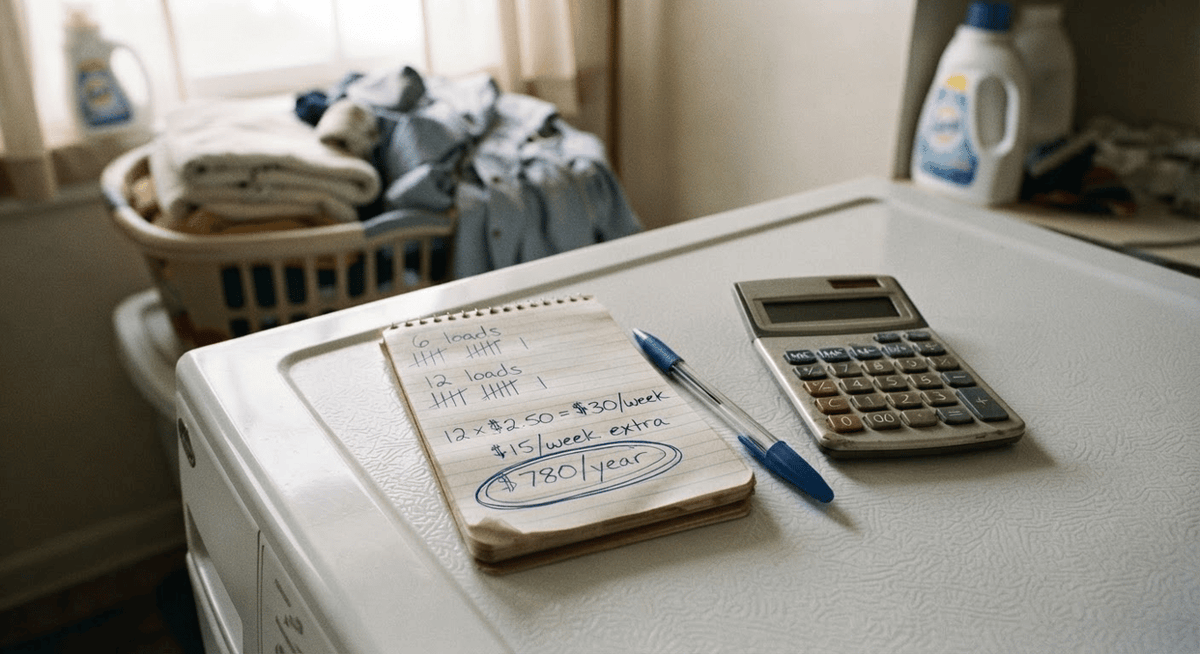
In a lot of homes, the washer doesn't need replacing.
The layer inside it needs dissolving.
How Many to Get
X-All isn't sold in stores. It's available online from the company.
A typical household runs about 6 loads a week. Each box holds 6 tablets, one per load, so one box lasts about a week.
Plans come in packs, and the right one depends mostly on your machine:
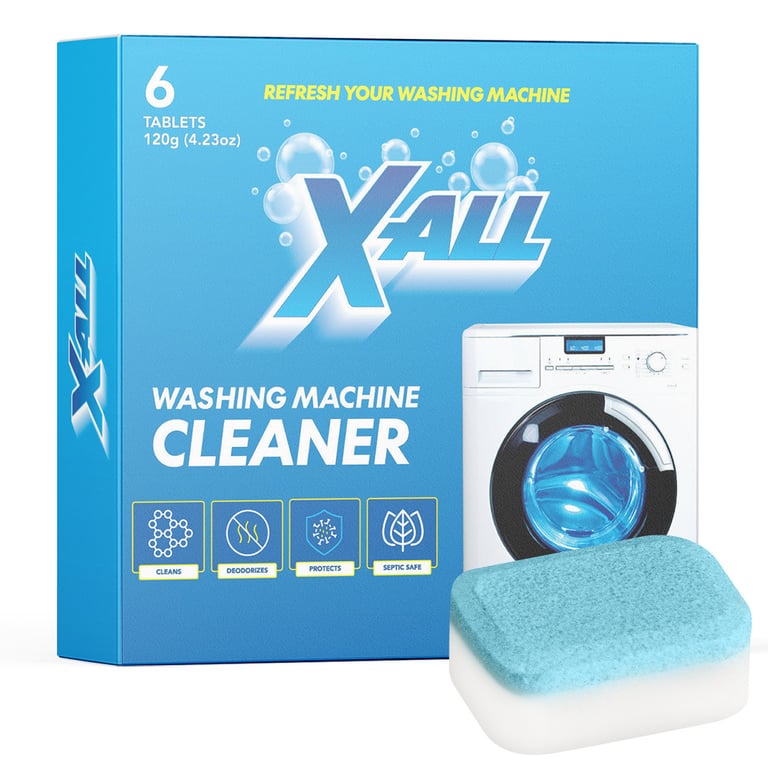
4 boxes · about 1 month
Machines under 5 years old, or laundry that doesn't smell yet.
12 boxes · about 3 months
Machines 5 to 10 years old, or one that has never been cleaned.
24 boxes · about 6 months
Machines over 10 years old, hard or well water, or laundry that already smells. The first weeks clear old layers; the rest keeps them from coming back.
Click here to check today's price on X-All
P.S. If towels smell fine out of the dryer but musty out of the closet, the problem isn't the laundry. It's the layer inside the machine. And you can dissolve it with X-All, which comes with a 30-day guarantee.
Common Questions
Is it safe for my machine?
It's made with citric acid, a mild acid found in fruit, and the kind washer LG recommends for descaling.
Does it work in a top loader?
Yes. Top loaders don't have the rubber ring, but scrud still builds up under the drum and around the outer tub. Same tablet, empty drum, one cycle.
What about a front loader?
That's what I have, and front loaders usually smell the worst. The door seals up tight, so the inside never really dries. And the rubber ring holds water like a gutter. That fold is where the black flecks on the kids' socks were coming from. Same tablet, empty drum, one cycle.
What if my machine is old?
Then you probably need it most. Mine was 9 years old. The older the washer, the more years of scrud are inside, so give it a couple of weeks before the smell is gone for good.
What if my washer is really big?
One tablet per cycle, any size.
Do I still use my detergent?
Yes. X-All never goes in with your clothes. It goes in the empty drum after they come out, and it cleans the machine. You'll probably use less, though. The extra scoop was feeding the scrud.
Will it get the smell out of sweaty soccer clothes?
It cleans the washer, not the clothes. But that's the point. Same towels, same soap, different machine. That's what proved it to me.
Does it have a scent?
X-All Washing maching cleaner does not have a scent, it's main goal is to REMOVE any possible scents that you do not want lingering around in your washing machine!
What if it still smells after the first one?
That's normal if your washer has a few years on it. It comes off in layers. Give it a couple of weeks before you judge it.