All my life I thought laundry had 3 steps:
Wash, Dry, Fold
Then I found the 4th step in my washer's manual, and it explained why my towels came out musty, no matter what I did.


My sister was helping me with the dishes when she dried her hands on my kitchen towel.
Then she lifted it to her nose and asked,
"Is this clean?"
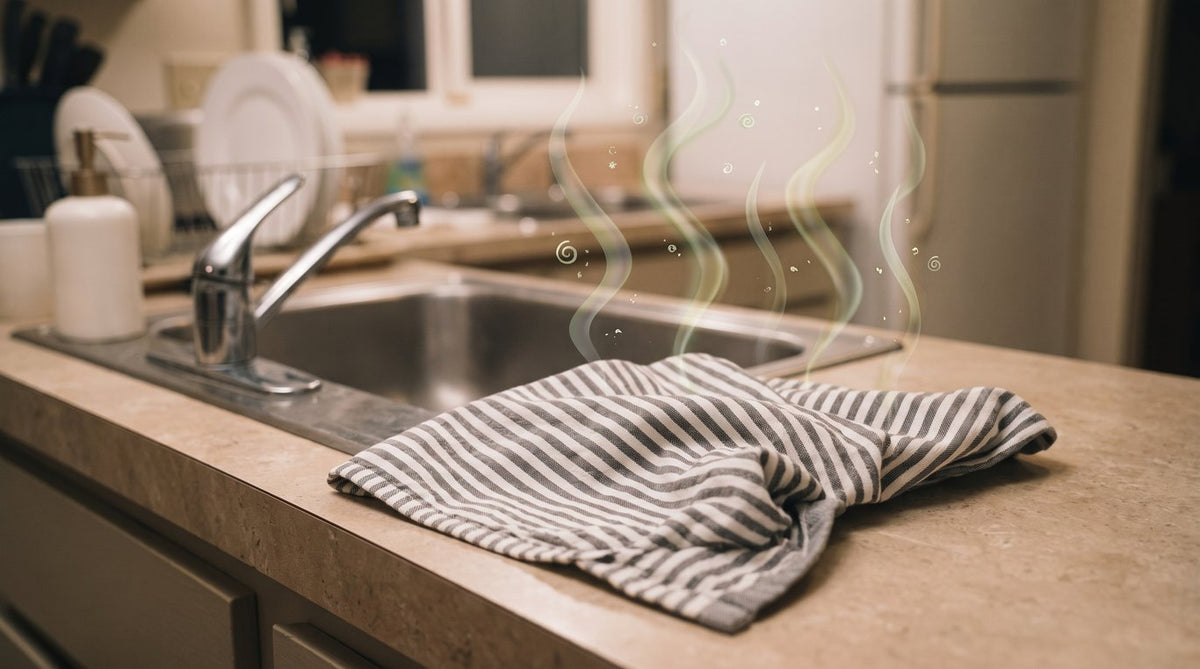
It was. I'd washed it that morning, but the musty smell was still there, and she wasn't the only one who noticed.
My daughter said her hoodie smelled like a wet dog.
My husband started leaving his work coveralls out in the truck.
I tried vinegar, an extra scoop of detergent, even those scent beads.
Every one of them worked for about a day. Then the smell came back.
My washer was 9 years old, and I figured maybe I needed a new one.
Then one night I sat in the laundry room with my phone and typed,
"Why do my clean towels smell?"
The answer came from the strangest place:
Hospital laundry.
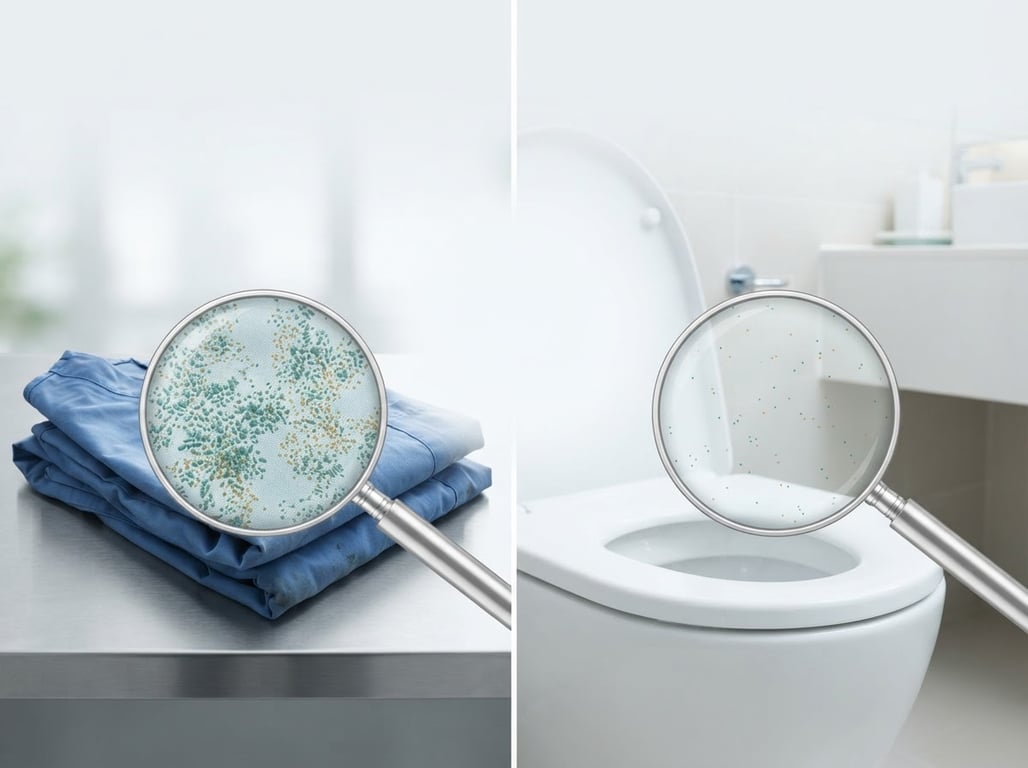
One study found that after a night shift, nurses' scrubs averaged 5,795 colonies of bacteria per square inch.
Another found the average toilet seat has about 50.
That makes those scrubs over 100 times dirtier than a toilet seat.
That makes sense. Nurses are around sick people all day.
But here's what surprised me.
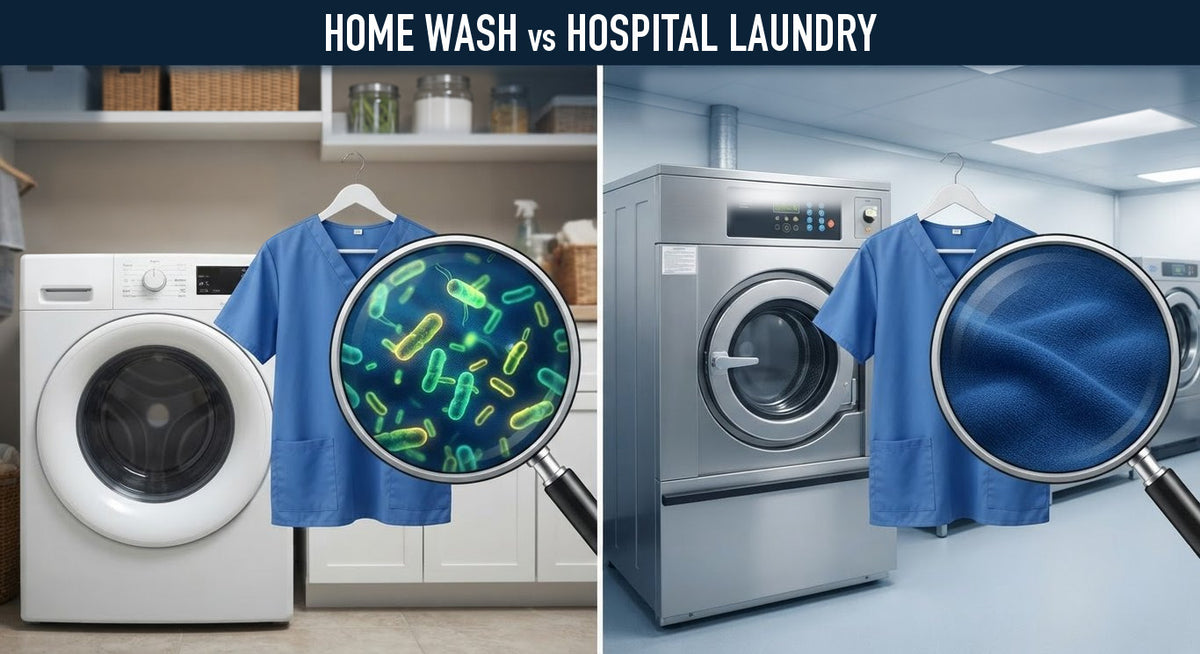
When researchers tested scrubs that had gone through a hospital's laundry, they came out as clean as brand new scrubs that had never been worn.
Then they tested scrubs that hospital staff had washed at home, in ordinary washing machines.
Almost 1 out of every 2 came out still carrying coliform bacteria.
Same kind of scrubs.
The difference was how they were washed.
I had one of those ordinary machines too.
Mine was turning out towels that looked clean but smelled like a wet dog.
So what was the hospital doing that I wasn't?
It wasn't more detergent or fabric softener. (In fact, that extra scoop I'd been adding was making it worse. More on that in a minute.)
It was the 4th step.
While most of us wash, dry and fold, hospital laundries have been adding a 4th step for about 100 years.
And they don't do it once a month. They do it every single load, and their towels and scrubs come out fresh, load after load.
Here's the part that got me:
There's a home version of that 4th step, and it was right there in my washer's manual, buried in the fine print at the back.
Nobody told me. I'd bet nobody told you either. (There's a good chance it's in your manual too.)
Once you see what the 4th step does to the smell, you'll never go back to 3 steps.
But first, let me show you the hidden cause behind the smell we all hate:
Limescale

When I first bought my washer, wash, dry and fold was plenty. My towels came out soft, and my sheets smelled like nothing at all, which is exactly how clean is supposed to smell.
But a few years in, my clothes weren't coming out as fresh anymore.
I didn't understand why until I read about what hard water does inside a washer. Over time, minerals like calcium and magnesium build up inside the machine, and it gets worse and worse at cleaning your clothes.
You know the chalky ring you see in a pot after boiling water?
Rinse the pot right after you boil, and that ring wipes off with your finger.
Leave it for a few months, and you're scrubbing with steel wool.
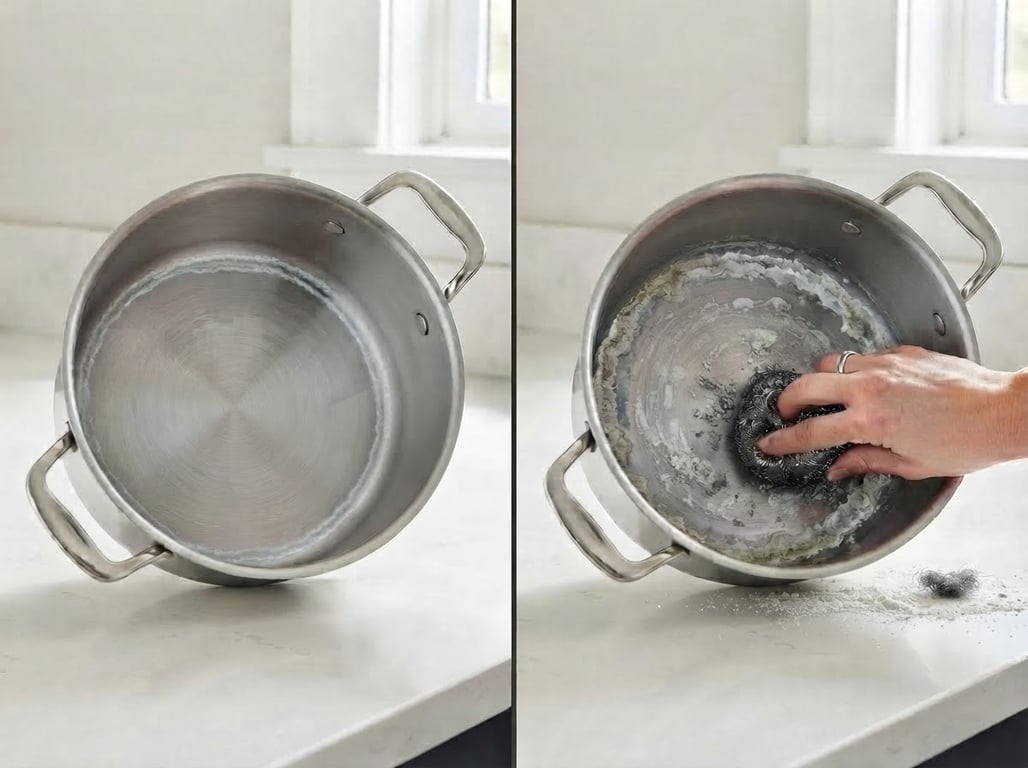
Your washer works the same way. The water dries, and the minerals stay behind. Every load leaves a thin layer of chalk.

After one load, it's thin as paper.
But do 6 loads a week for 9 years, and that's almost 3,000 loads. Every one of them left a layer behind, and together they built into a hard crust: limescale.
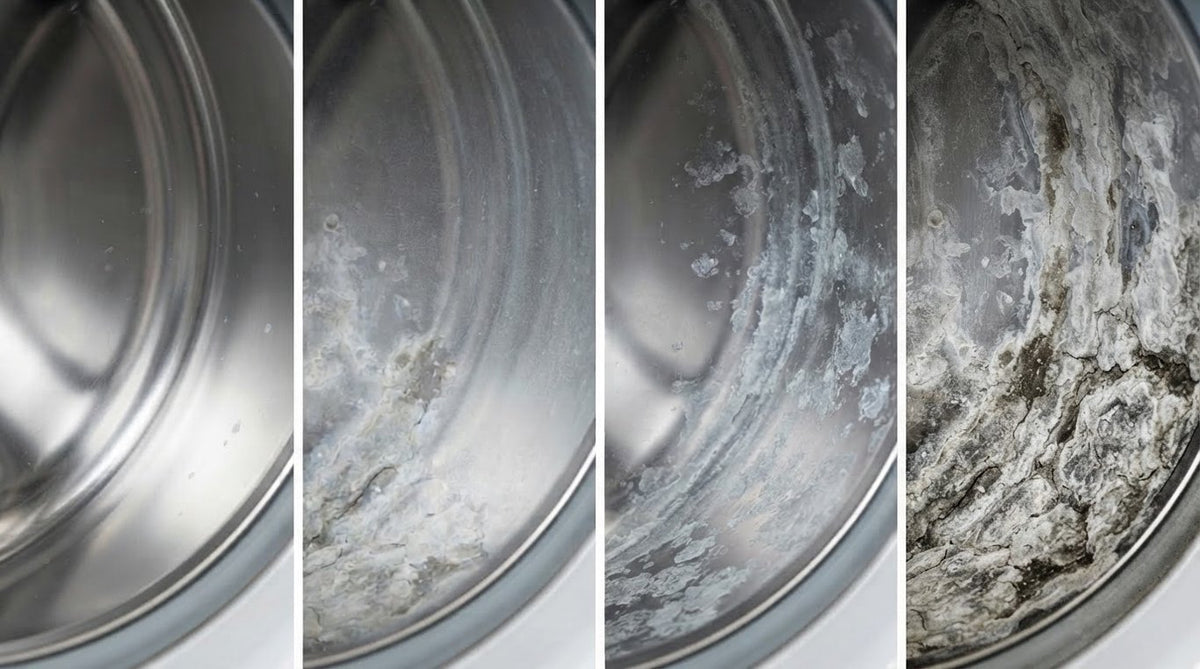
In all that time, I'd run the self-clean cycle maybe 100 times.
- 3,000 loads putting chalk in.
- 100 cycles trying to get it out.
That's 30 loads of chalk for every cycle that tried to clean it.
No wonder the chalk was winning.
What's worse is, self-cleaning cycles don't actually get rid of all the dirt. (One of the biggest companies that makes these machines knew it, too. More on that in a minute.)
Here's why that chalk turns into a smell.
When your washer is new, the inside is smooth, so everything rinses right off.
Chalk is rough, like sandpaper. And rough holds on. Leftover soap, fabric softener and lint get caught in it, load after load. That gunk is the musty smell. The limescale is what holds it in place.
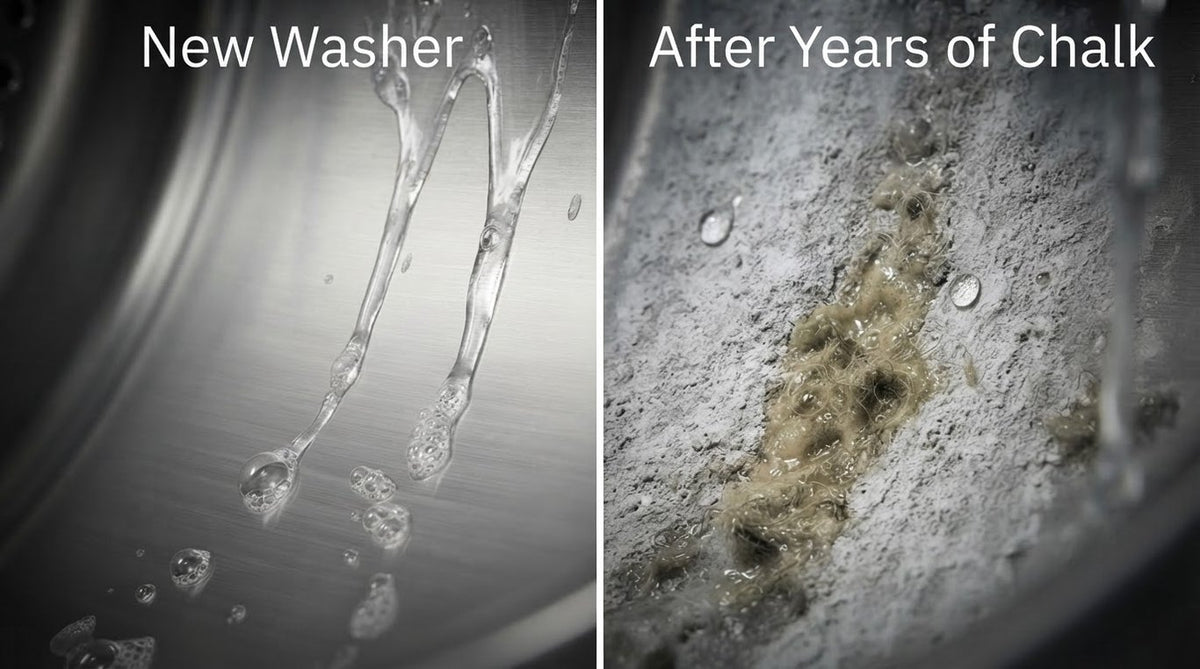
And it never gets a chance to dry out.
Newer washers are built to use far less water, and the doors seal up tight.
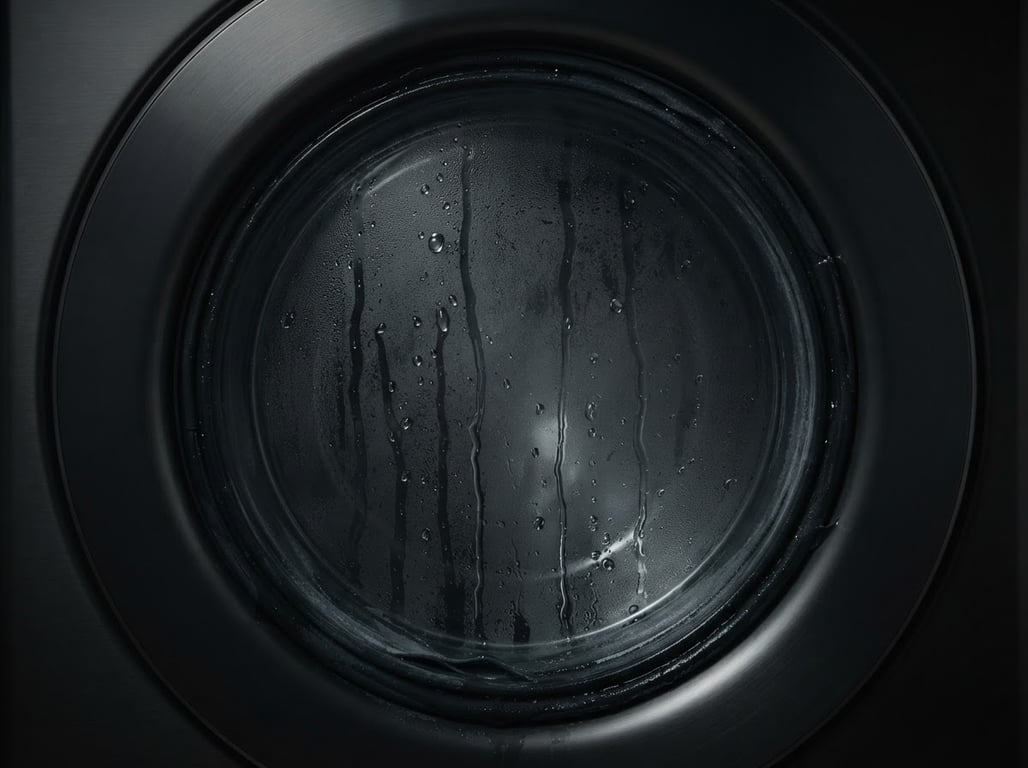
So the gunk just sits there, damp, between every load. That's where the swampy smell comes from.
The worst part?
I never saw any of it happening, because it builds up in the nooks and crannies you can't see or reach:
1. The heater
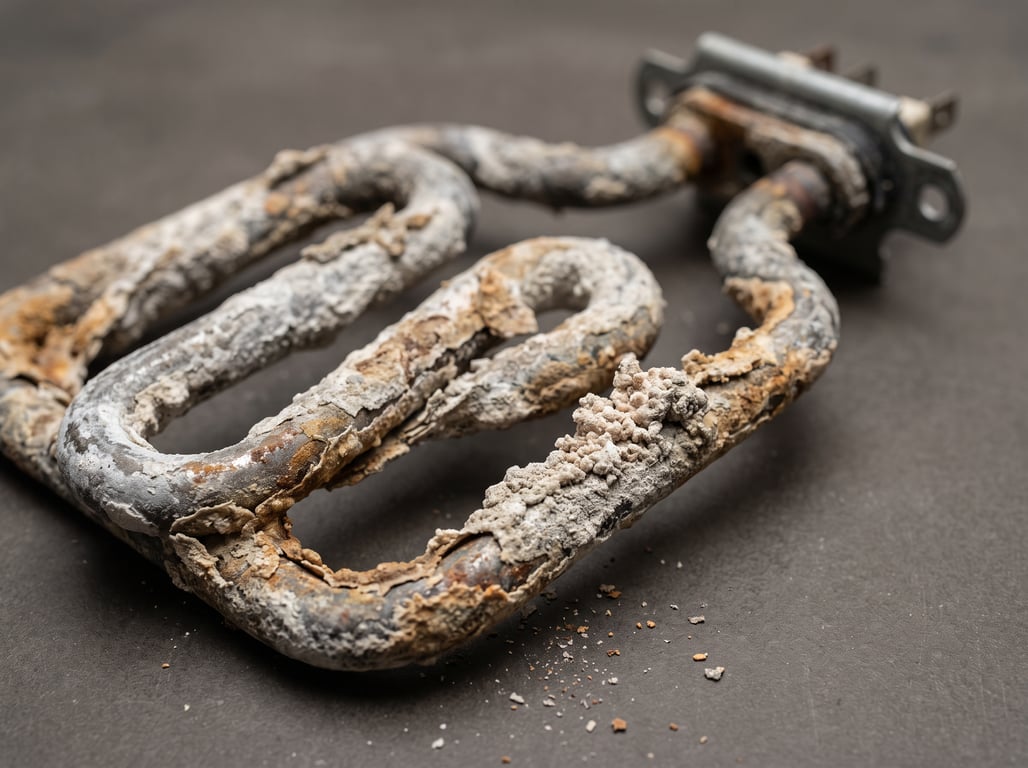
It coats the heating element, so your washer has to work harder to heat the water.
2. The outer tub
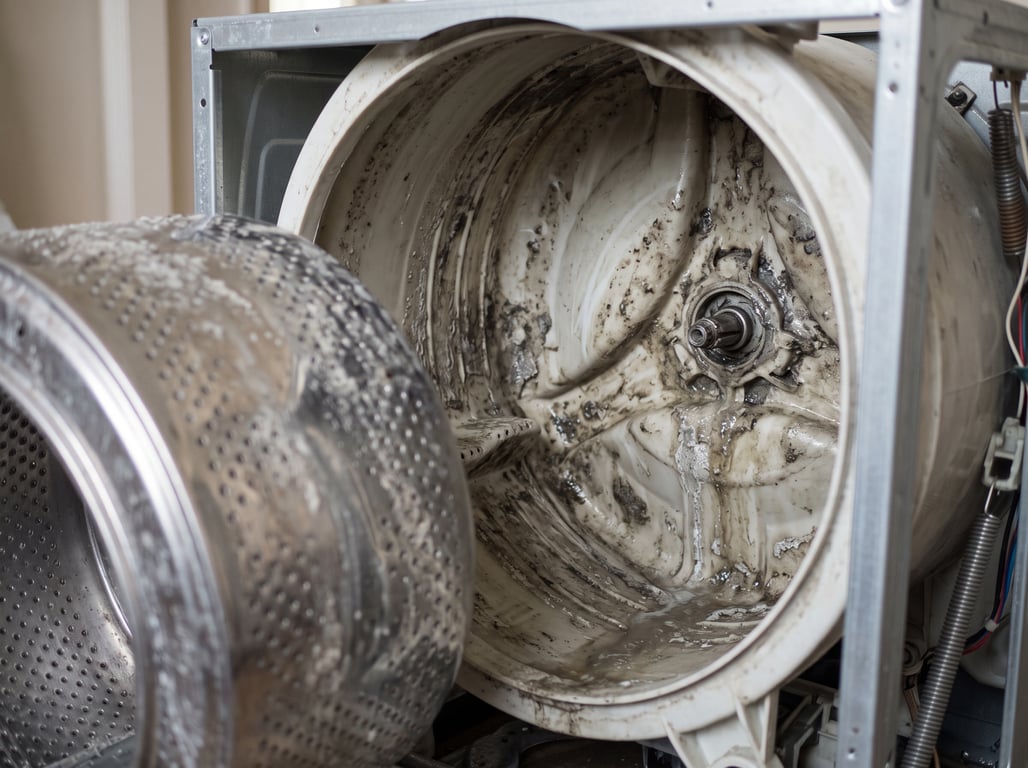
It crusts over the outer tub behind the drum, where leftover soap and softener stick to it instead of rinsing away.
3. The bottom of the tub
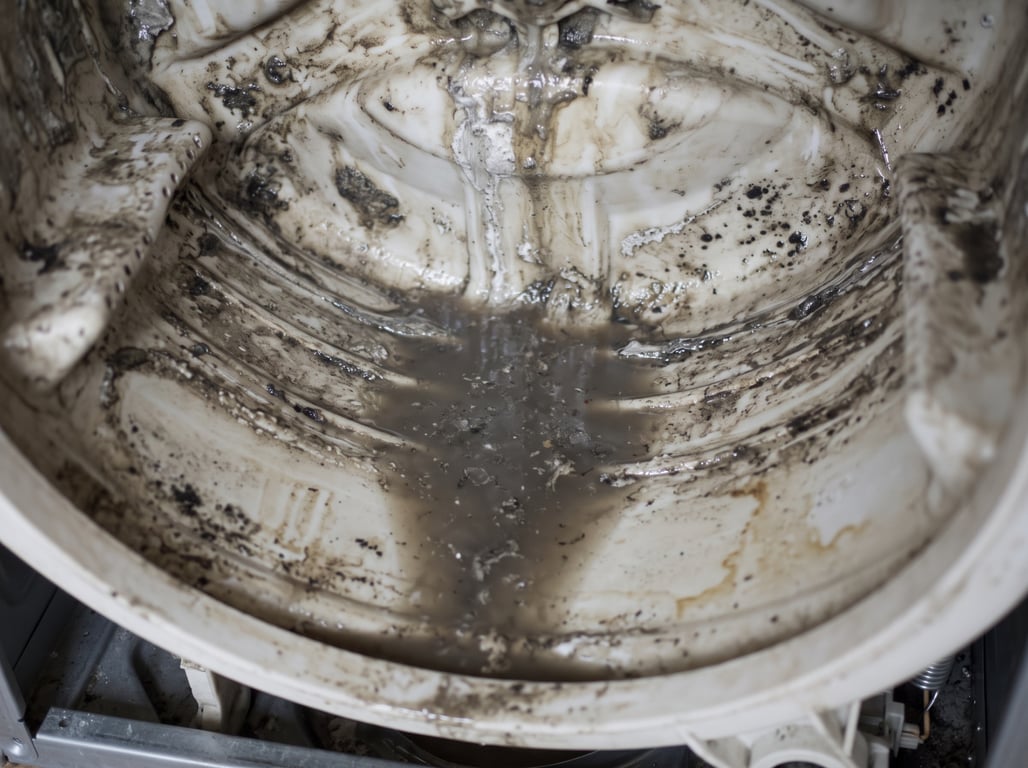
It settles where a little water always sits. That spot never fully dries, and the swampy gunk there is where the smell lives.
4. The rubber ring
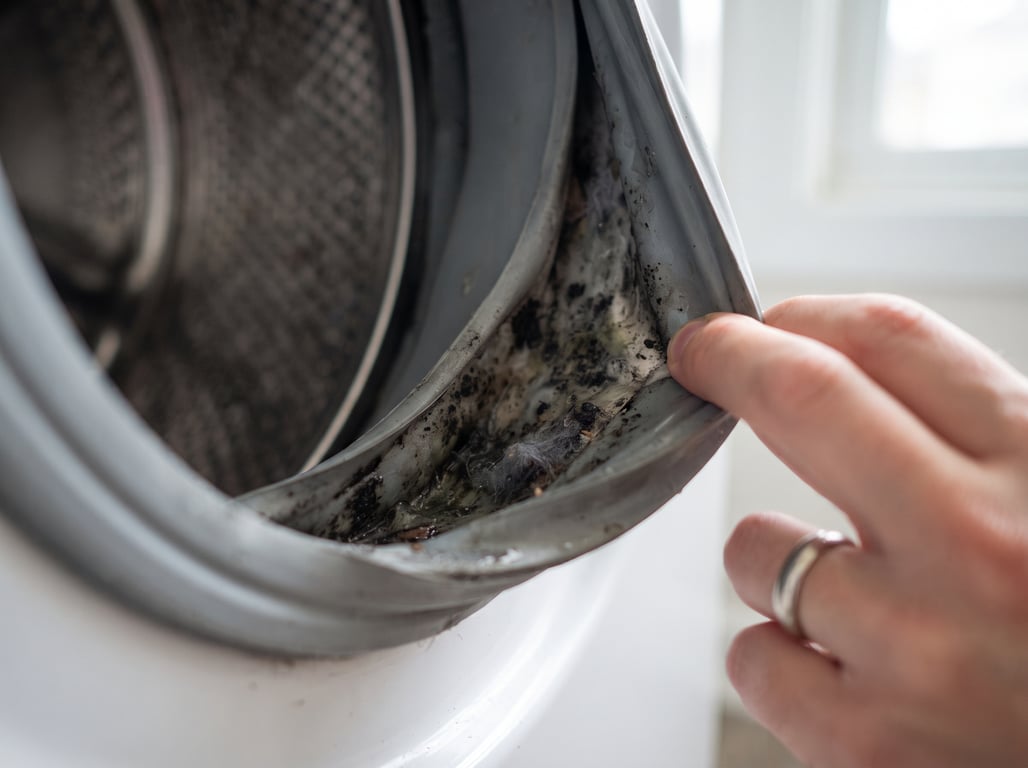
It hides deep in the fold of the door seal, where gunk builds up and breaks off as those little flecks of black on your clothes.
5. The detergent drawer
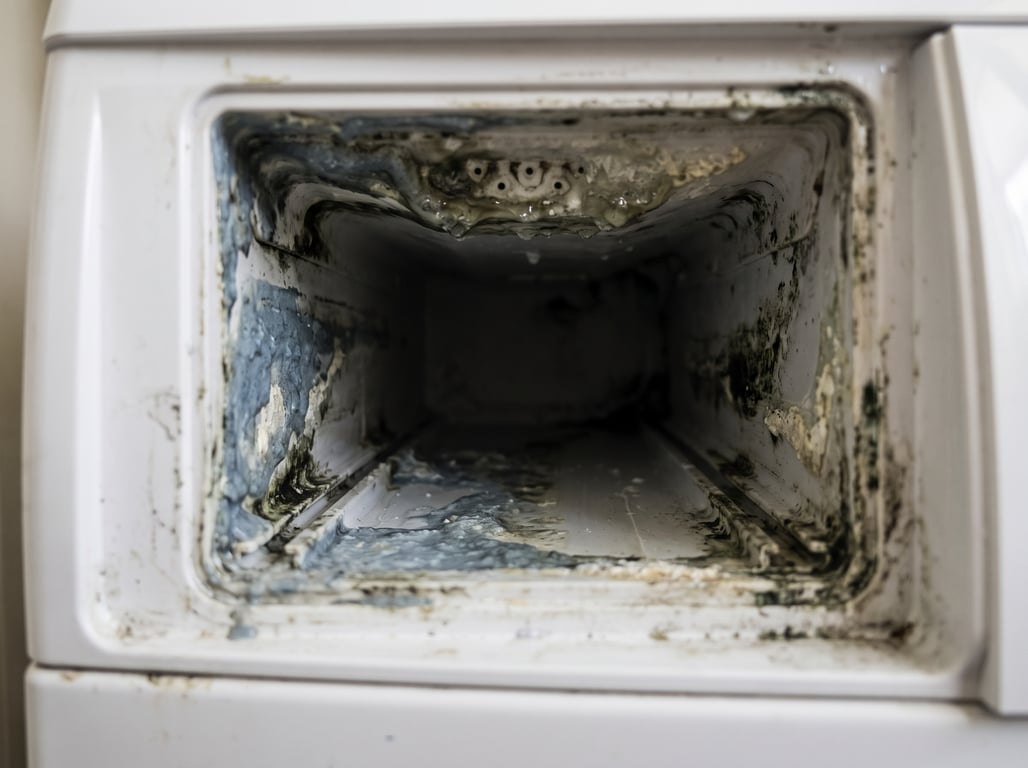
It lines the channel behind the drawer, so every scoop of soap passes through it before it ever reaches your clothes.
The water that rinses your clothes runs through every one of these spots first. That's why my clean towels kept coming out smelling like a wet dog. They were being rinsed in it, every single load.
Try this before you read any further.
Open your washer door and run a finger under the rubber ring, deep in the fold.
Black gunk? Slimy? Smells like the towels?
It gets worse the longer it goes…
The more limescale coats your machine, the harder it has to work and the less clean your clothes come out.
You end up rewashing the same load twice, finding flecks of black on your shirts, and wearing the washer down years before it should.
"But Isn't The Self-Clean Cycle Supposed To Keep My Washer Clean?"
That's exactly what I thought, until I read about a federal class action against one of the biggest washing machine companies in America.
Summarizing the evidence in that case, a federal appeals court wrote that the company's engineers "knew, however, that the new cleaning cycle would not remove all residue deposits."
The people who built that cycle knew it wouldn't get everything out.
Then I dug my own manual out of the kitchen drawer.
It tells you to run the cleaning cycle once a month to keep odors away.
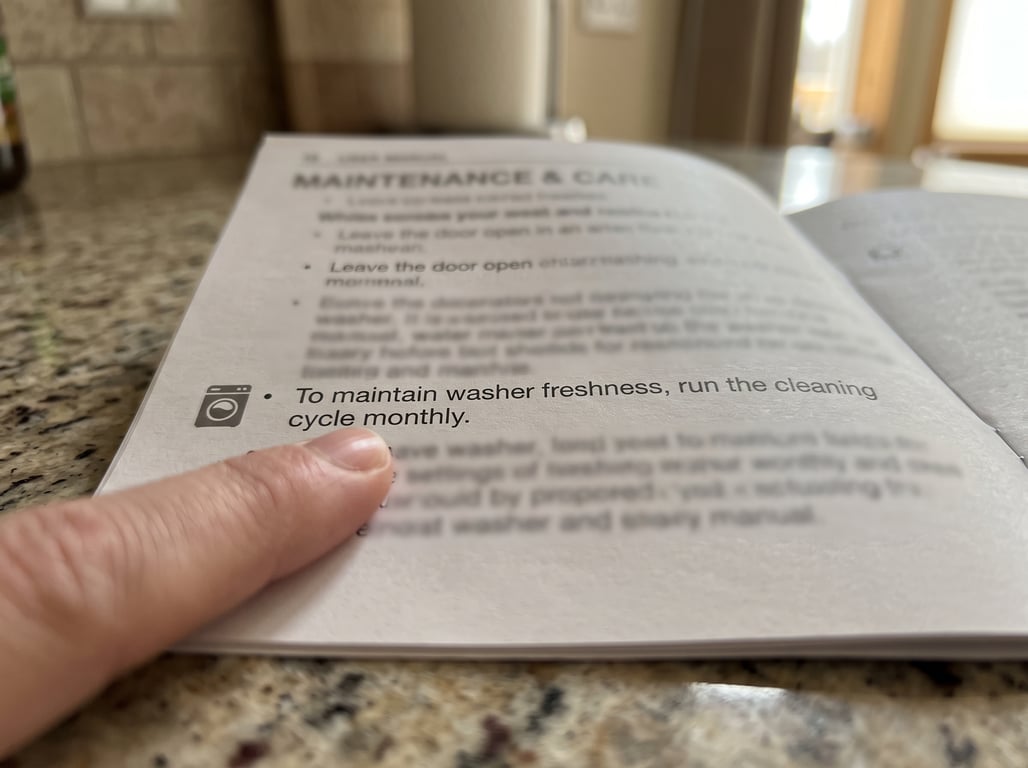
But I hadn't skipped it. I'd run it about 100 times, against 3,000 loads of chalk.
And if the company that designed one of these cycles couldn't count on it to get everything out, I wasn't going to count on mine.
That's the buildup's fault, not yours.
Why Vinegar Didn't Work (And Neither Did Anything Else)
Looking back, none of my fixes stood a chance.
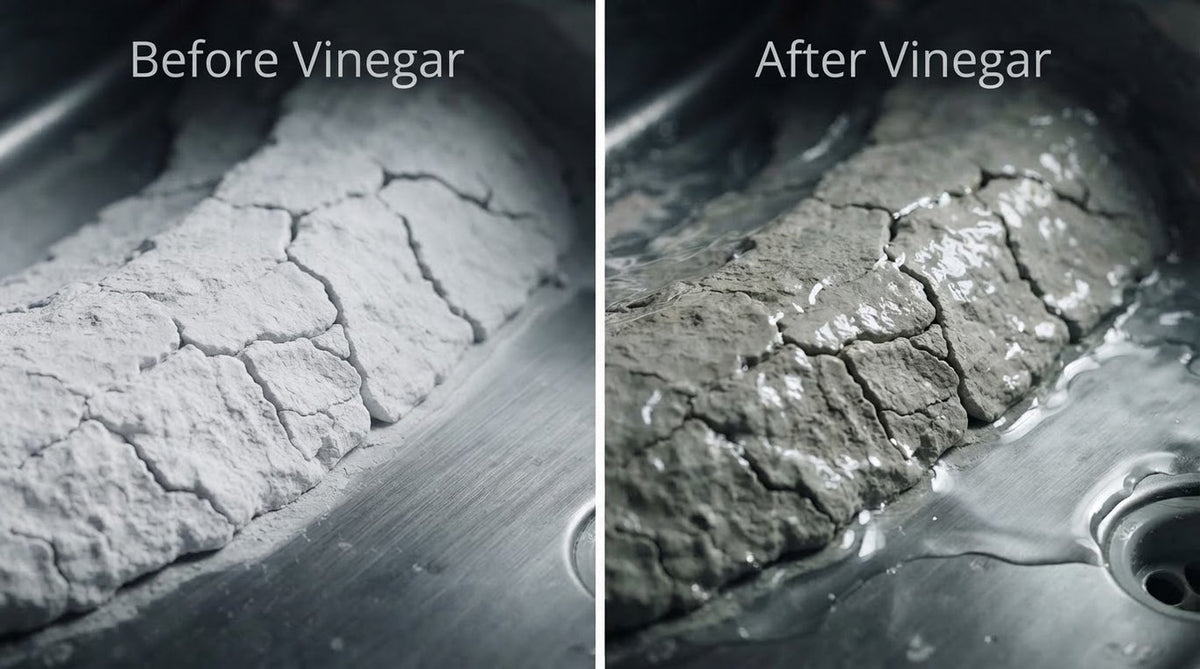
Vinegar
It's a mild acid to begin with. By the time a cup of it hits a full tub of water, it's watered down and drained away in minutes, long before it can break up years of crust.
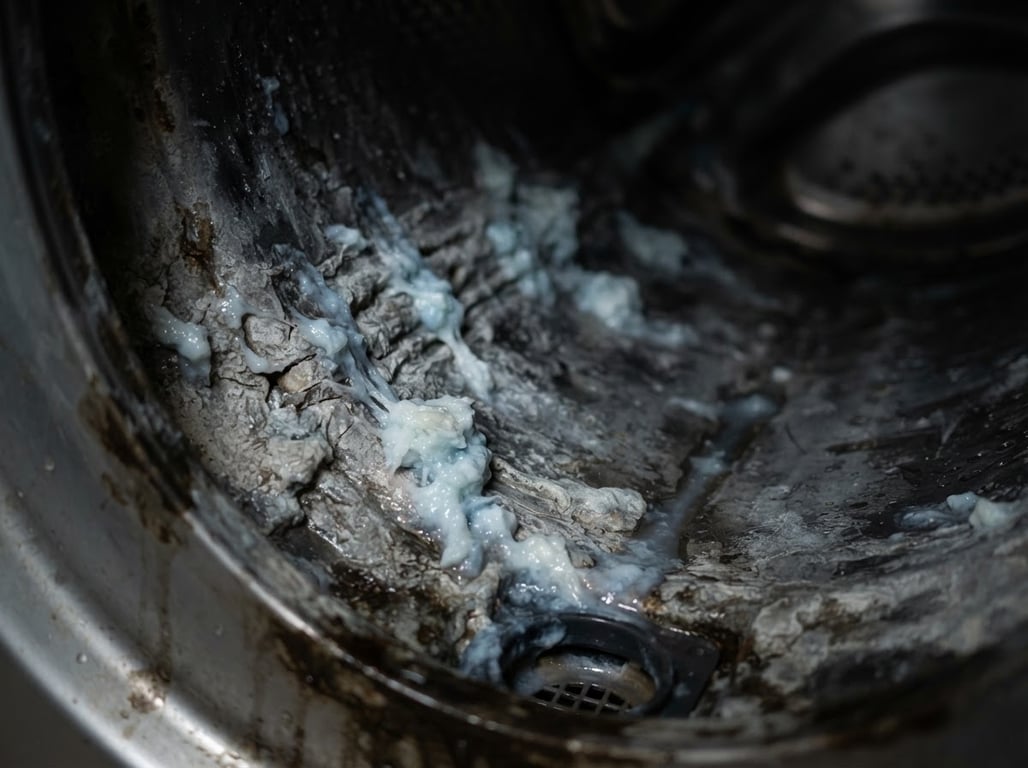
Too much detergent
It leaves soap behind inside the drum, and that extra scoop gave the limescale more gunk to hang on to.
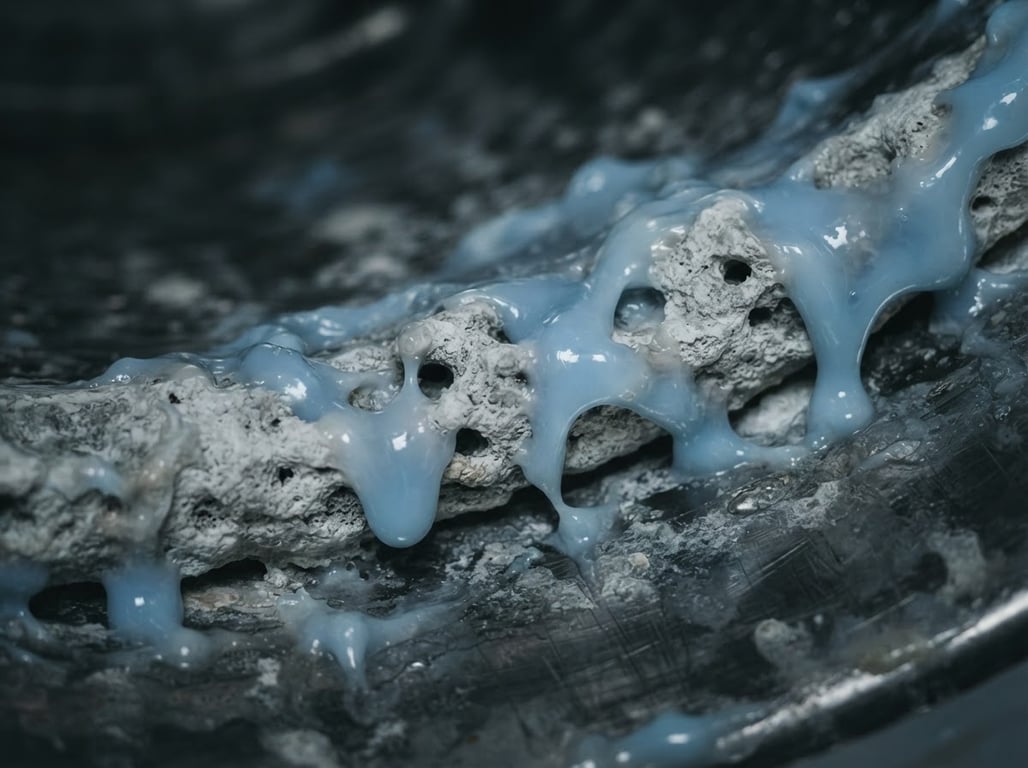
Fabric softener
It did the same thing. It's made to cling, and it clung right to that crust.
Scent beads
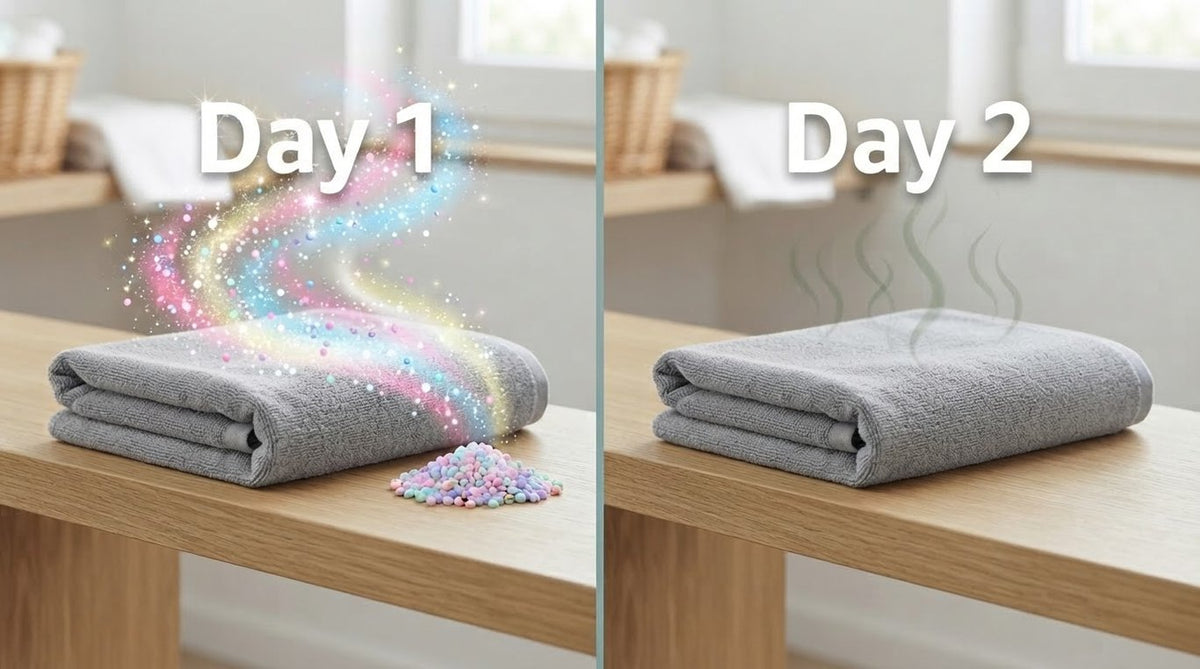
They were perfume sitting on top of the smell. The minute they wore off, the wet dog came back.
I wasn't fixing the problem. I was feeding it.
The Secret 4th Step
So what do hospital laundries actually do at the end of every load?
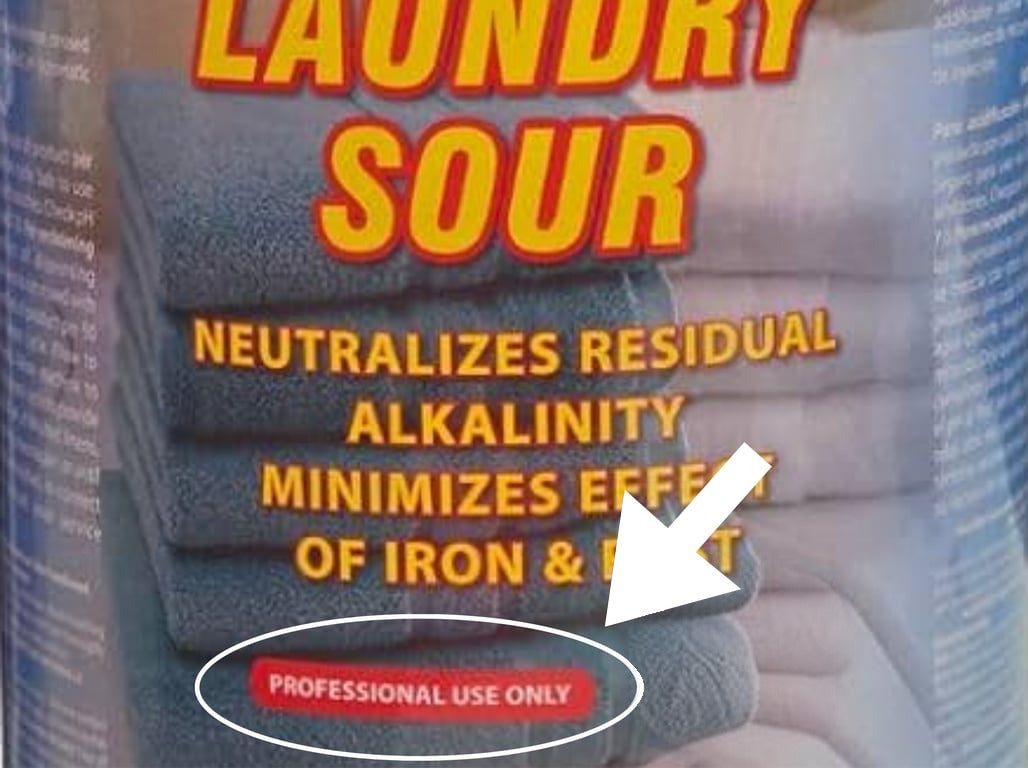
Their 4th step has a name. In commercial laundry, it's called souring.
At the end of every wash, they add a splash of acid to the rinse water. It works a lot like lemon juice on that chalky ring in your pot, breaking up the soap and minerals before they can settle in.
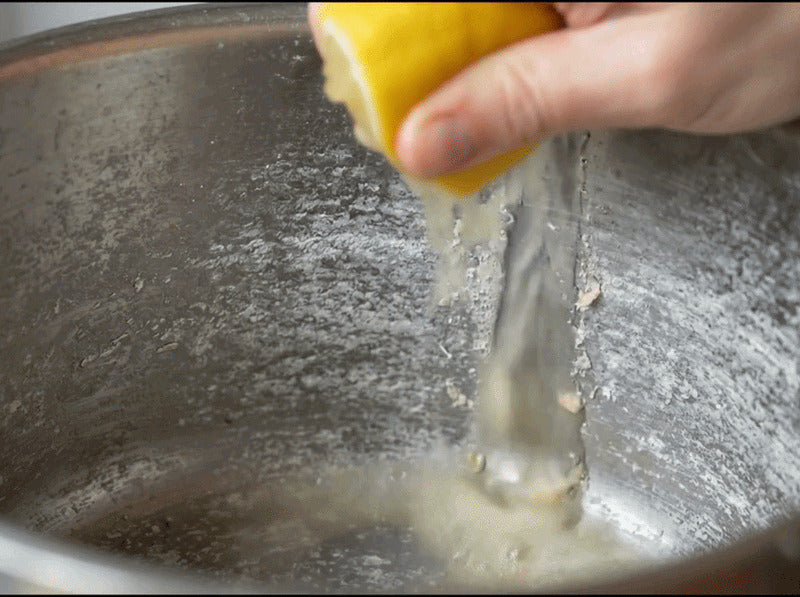
They never let the chalk get past thin as paper. They rinse the pot every time.
Why had I never heard of it?
Because a commercial sour was never made for my laundry room. It's a strong, concentrated acid, and the bottles are labeled for professional use in big commercial machines.
So I tried a do-it-yourself version. I bought a bag of citric acid from the grocery store and stood in the laundry room guessing at the amount with a measuring cup.
I had no idea if I was using too little to do anything, or way too much.
I didn't want to guess with a machine I'd paid for.
So I went looking for a version made for the washer at home, already measured out.
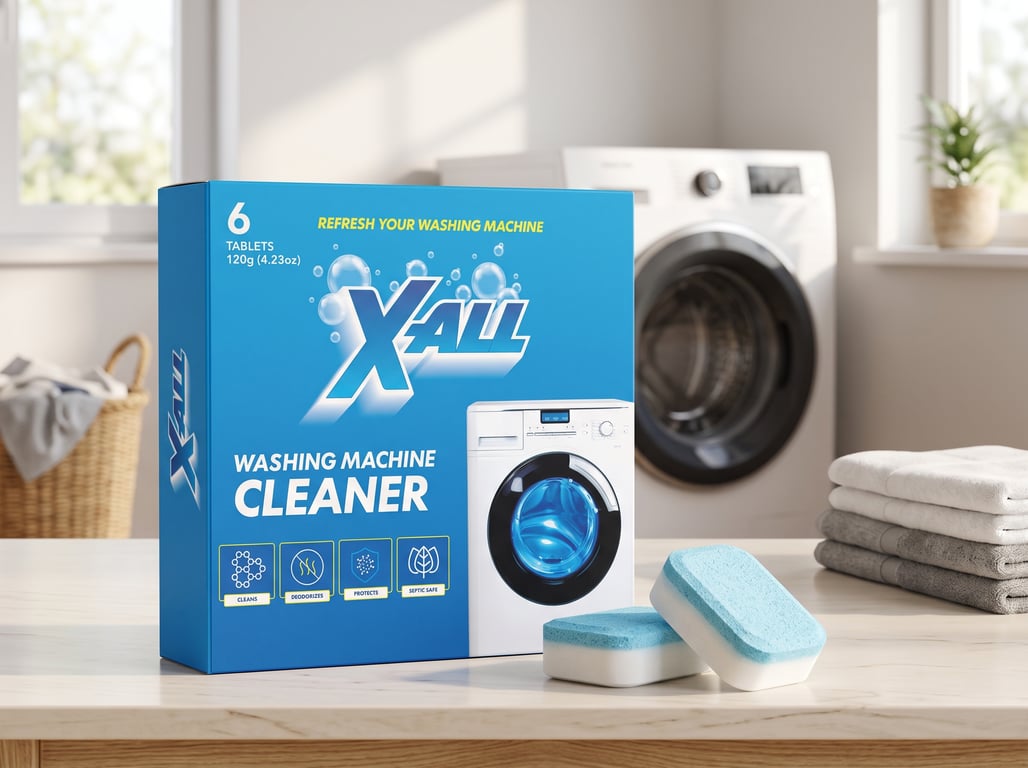
That's how I found X-All.
So The Home Version Flips It Around
Instead of treating your clothes in the rinse, you treat the machine, with the drum empty.
That's the 4th step from my manual: an empty cycle with a cleaner in the drum. X-All is that cleaner.
It's one tablet made with citric acid, the same acid in lemons, pressed together with baking soda, already measured out. No chlorine bleach.
No measuring cup. No guessing.
To be clear, X-All is a cleaner, not a disinfectant. Its job is the buildup and the smell.
It works where my vinegar didn't because a cup of vinegar is mostly water by the time it hits the drum. X-All puts the whole dose right in the drum, where the water picks it up and carries it everywhere.
Here's what happens when the water hits it:
1. The tablet fizzes and breaks apart as the citric acid meets the baking soda, the same fizz you get when lemon juice hits baking soda, so it dissolves into the water instead of sitting in a lump at the bottom of the drum.
2. The water carries it into every nook and cranny your hand can't reach: the outer tub behind the drum, the bottom of the tub, the fold in the rubber ring, and the channel behind the detergent drawer.
3. The citric acid grabs onto the minerals and breaks up the limescale, so it can't stay stuck to the walls.
4. Once the crust breaks down, the gunk stuck to it has nothing left to cling to. A little surfactant (a cleaning agent) helps lift it loose, and with no clothes in the drum to catch it, it all drains away. The baking soda goes after the smell on the way out.
The 4th Step: Empty-Load

Empty the drum
No clothes.
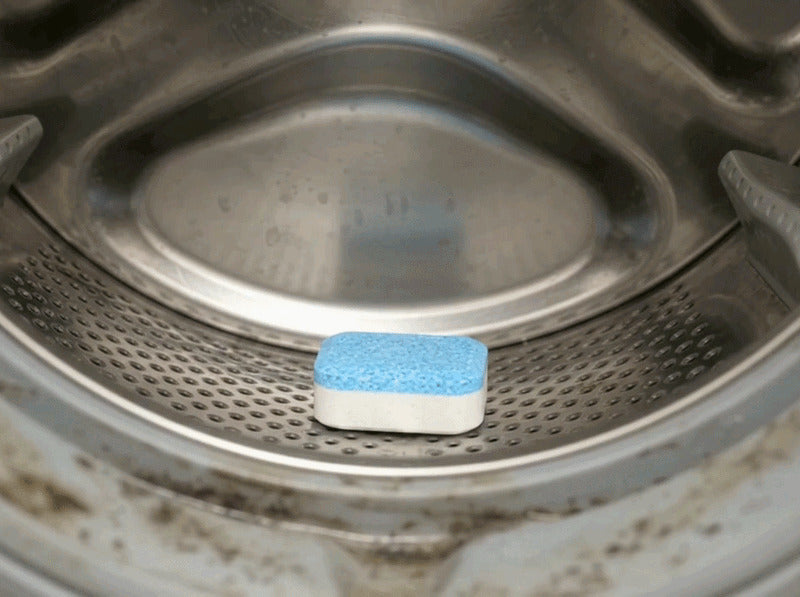
Drop in one tablet
Straight into the drum.
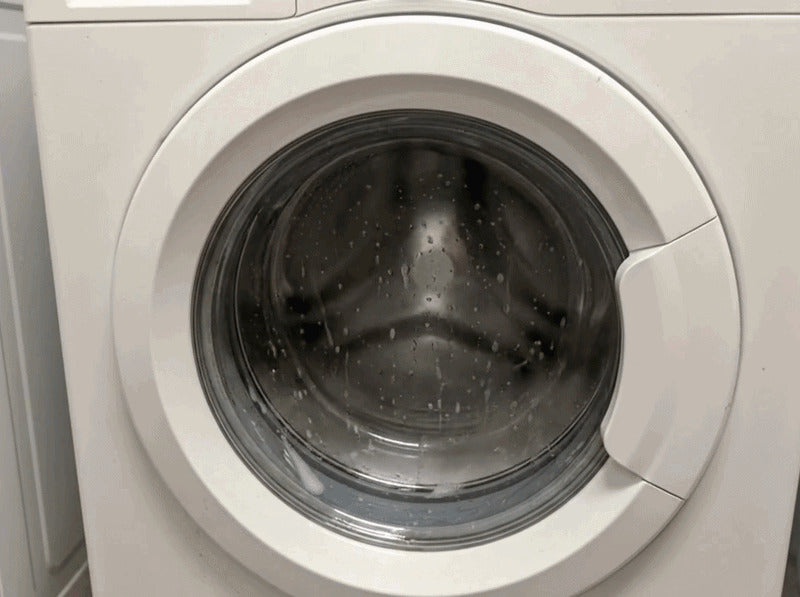
Run a cycle
That's it.

The trick that makes it painless: pick a laundry day. When the last load of the week goes into the dryer, I start the Empty-Load, and by the time I'm done folding, it's finished.
Wash. Dry. Fold. Empty-Load.
It's the only load you'll ever run that isn't about the clothes.
Why I Do It Every Week, Not Once A Month
The manual's schedule is built to keep the machine from breaking down.
The hospital's schedule is built to keep the clothes clean.
I wanted clean clothes.
Hospital laundries do their 4th step every single load. At home, one Empty-Load a week is the version I can actually keep, and it never lets the chalk get a head start.
Think back to that pot. A week of laundry leaves a few thin layers of chalk, and a weekly Empty-Load is rinsing the pot while the ring is still thin enough to wipe off with your finger.
For me, that's 6 loads of chalk for every cleaning, instead of 30.
Do it every week, and the chalk washes out before it can harden into limescale. No crust means the smell has nothing to hold on to.
Wait a month, and the chalk gets a month's head start, every month.
If your clothes already smell, the crust is already there. One tablet won't undo 9 years of it. Even one X-All customer said so:
Although XAll is cleaning up a lot of the gunk I don’t think it will erase the “years” of no XAll. Sharon Waronek, verified buyer
That's why the first few weeks of Empty-Loads matter most.
Could One Little Tablet Undo 9 Years Of Smell?
I'll be honest. Even after everything I'd read, I was skeptical.
I'd been let down by every fix I'd tried, and my machine was 9 years old.
I ran my first Empty-Load, just like the directions said.
Then I put through a load of old rags I didn't care about. They came out smelling like nothing at all.
Then the towels. I pulled one out of the dryer and buried my face in it. No wet dog.
Then my husband's work coveralls, the ones he'd been leaving out in the truck. That night, they were back on the hook by the door.
My daughter wore her hoodie two days in a row and didn't say a word, which from a teenager is a rave review.
I could smell the difference after that first cycle, but it took a couple of weeks of Empty-Loads before the musty smell was gone for good. 9 years of crust doesn't come out in one night.
Now it's just part of laundry day.
1. Wash: same detergent, same routine
2. Dry: clothes go in the dryer
3. Fold: while the washer runs
4. Empty-Load: once a week, one X-All tablet, empty drum, one cycle
The Next Load Of Towels
Do your Empty-Loads for a couple of weeks, then wait for your next load of towels.
You'll pull one out of the dryer without thinking, the way you did when your washer was new. All you'll smell is cotton. Just clean cotton, with nothing on top of it.

A few weeks later, my sister was over again. She dried her hands on the kitchen towel, lifted it to her nose out of habit, and put it back down without saying a word.
That's the whole point.
X-All's own reviews were full of people like me: rewashing the same towels, trying the same vinegar, and getting the same wet dog smell.
I Wasn't The Only One Who Found X-All
4.8 out of 5 82 reviews
-
Finally I’ve found a product that really works. My clothes no longer have that musty smell and my laundry room doesn’t have an odor.
VerifiedAnonymous
-
Just happy to finally get my washer cleaned for the first time in 21 years!!
VerifiedKris Cheek
-
I have had my washer for five years, it never smelled so good!…
VerifiedElizabeth Stout
-
I wish I would’ve had this product when my front loader was new. Although XAll is cleaning up a lot of the gunk I don’t think it will erase the “years” of no XAll.
VerifiedSharon Waronek
Reviews from Judge.me
How Many Should You Get?
If you're like me, you do laundry about 6 times a week, and you run one Empty-Load at the end of it.
One box of X-All comes with 6 tablets, one for every week, so a box lasts about 6 weeks.
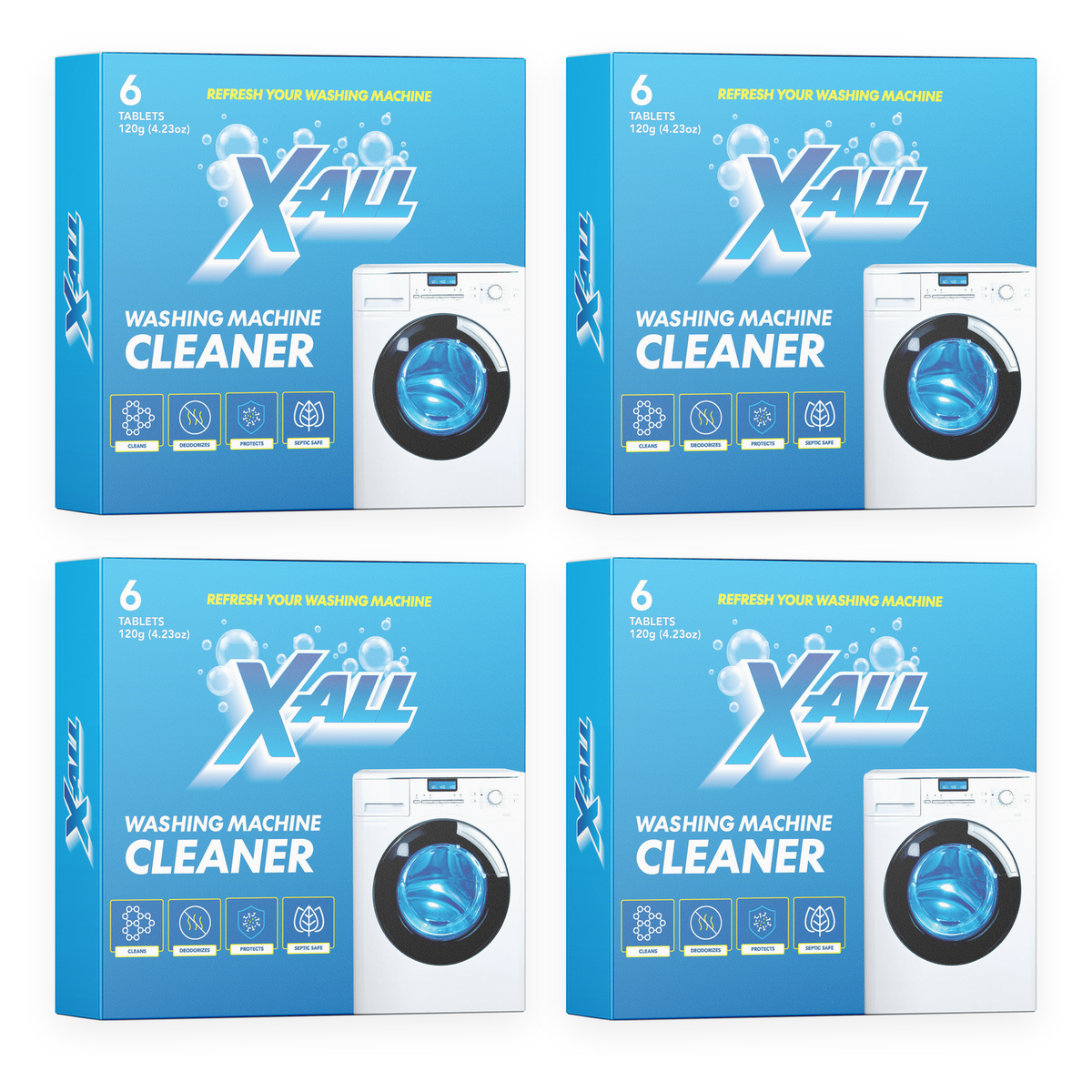
- 1 box · 6 weeks · $19.95Six weeks of Empty-Loads to try it.
- 2 boxes · 12 weeks · $39.90Enough to clear old buildup and keep going.
- Buy 2 Get 2 Free · 4 boxes, about 6 months · $39.90Was $79.80, save 50%. The one I'd pick if your clothes already smell. The first few weeks break up old buildup; after that, you're just keeping it from coming back.
Either way, it's a lot less than the new washer I almost bought.
Questions I Had Before I Tried It
Will it work in my machine?
Yes. Front loader or top loader, big or small, brand new or 20 years old.
Front loaders usually smell the worst. The door seals up tight, so the inside never fully dries, and the rubber ring around the door holds water like a gutter. That fold is where the flecks of black come from.
Top loaders don't have the ring, but they have the same problem in a different spot. The chalk builds up under the drum and around the outer tub, where you'd never think to look.
Either way, the 4th step is the same: drop one tablet in the empty drum and run a cycle.
Age matters more than type. The older your washer, the more years of crust are inside, so give it a few weeks of Empty-Loads before the smell is gone for good. Mine was 9 years old, and it took me about two weeks.
If your washer is new, start now, while there's nothing to clear out. That's the hospital way: never let the chalk get past thin as paper.
Does it replace my detergent?
No. You keep doing laundry exactly the way you do now, with the same detergent and the same routine.
X-All never touches your clothes. It goes in the empty drum after the clothes come out, and it cleans the machine your clothes get washed in.
You may find you need less detergent, though. I stopped adding the extra scoop, because the extra scoop was part of the problem.
How often do I use it?
Once a week. Pick a laundry day, and run an Empty-Load when the last load of the week comes out.
Every load leaves a thin layer of chalk behind. A weekly Empty-Load washes it out while it's still thin enough to wipe off with your finger, before it can harden into crust and give the smell something to hold on to.
It doesn't add any time, either. I start it the minute the last load of the week goes into the dryer, and it's done before I finish folding.
If your clothes already smell, the crust is already there, so the first few weeks are about breaking up the old buildup. After that, you're just keeping it from coming back.
One box of 6 tablets lasts about 6 weeks.
What if my clothes still smell after the first one?
That's normal if your washer has a few years on it. One tablet won't undo 9 years of crust. It came off mine in layers, a little more with each Empty-Load.
I noticed a difference after the first cycle. But for a machine with years of buildup, give it a couple of weeks before you judge it.
And if you're not satisfied, contact us within 30 days and we'll help with a return under our 30-day satisfaction guarantee.